Tag Archives: Kazakhstan

Kazakhstan: Almaty Tenge Devaluation Protest in Pictures

15 Feb
Image

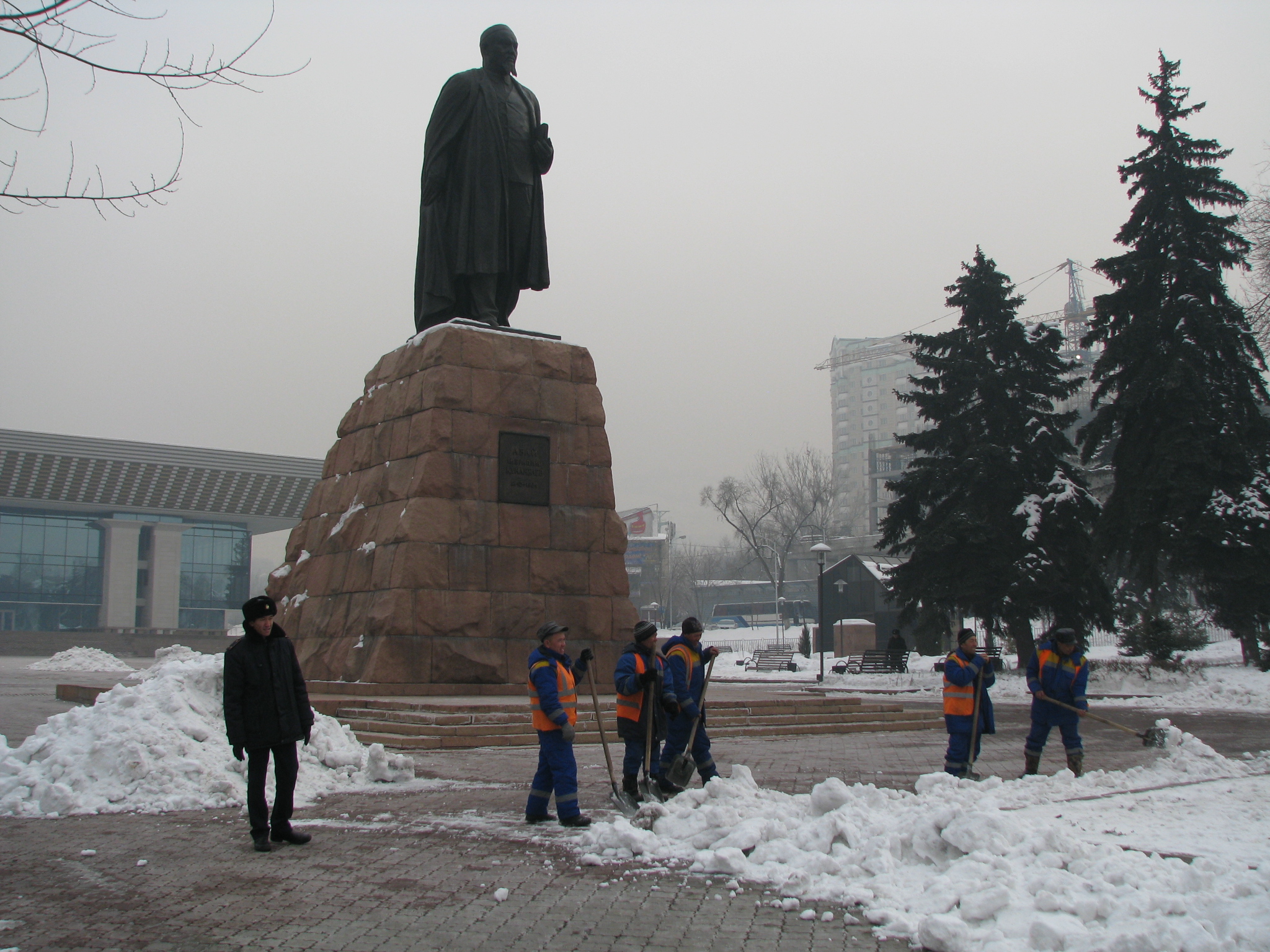
Abai looks on as workers clear snow from the square in front of Republic Palace demonstrators wanted to protest on

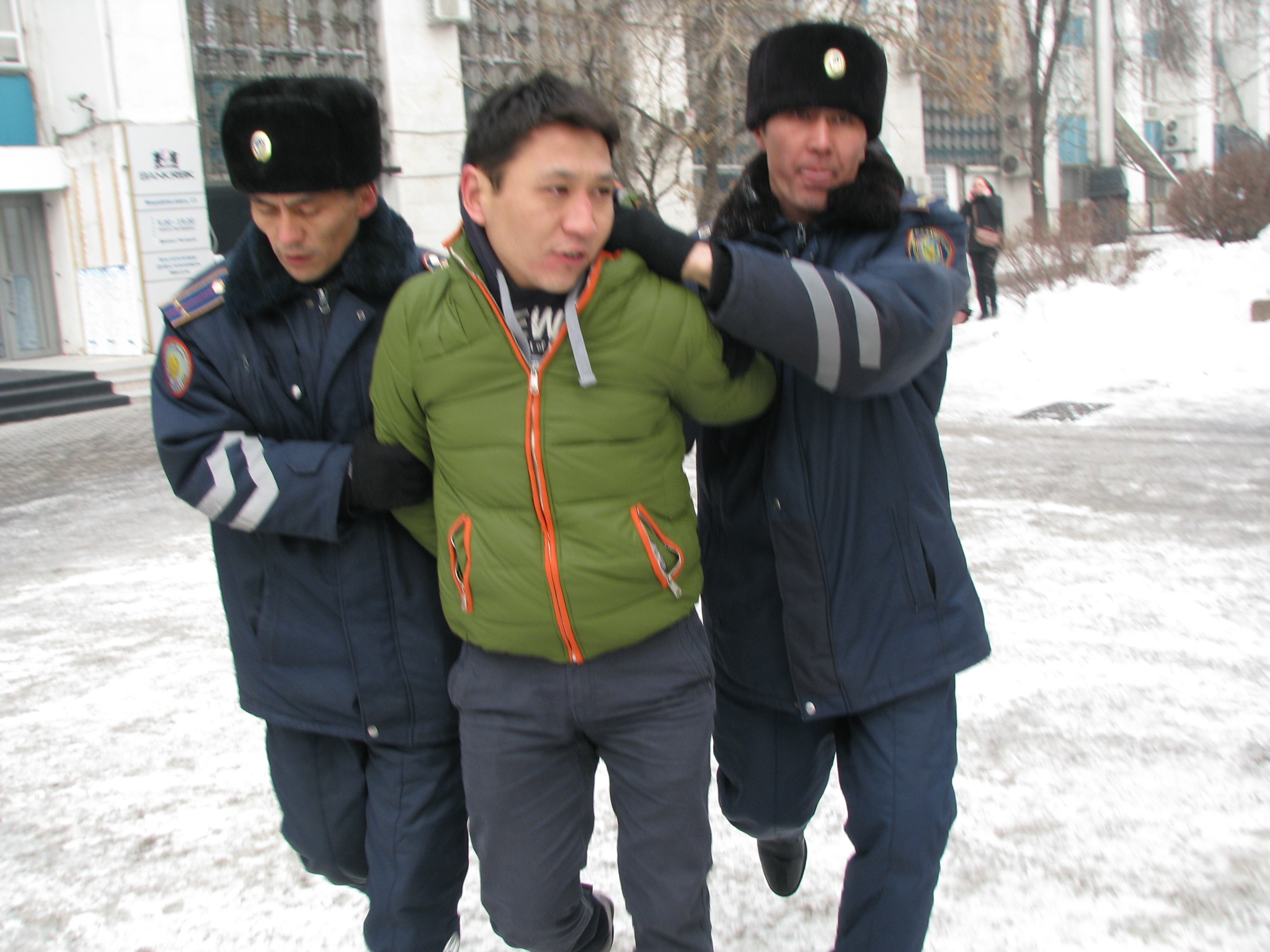
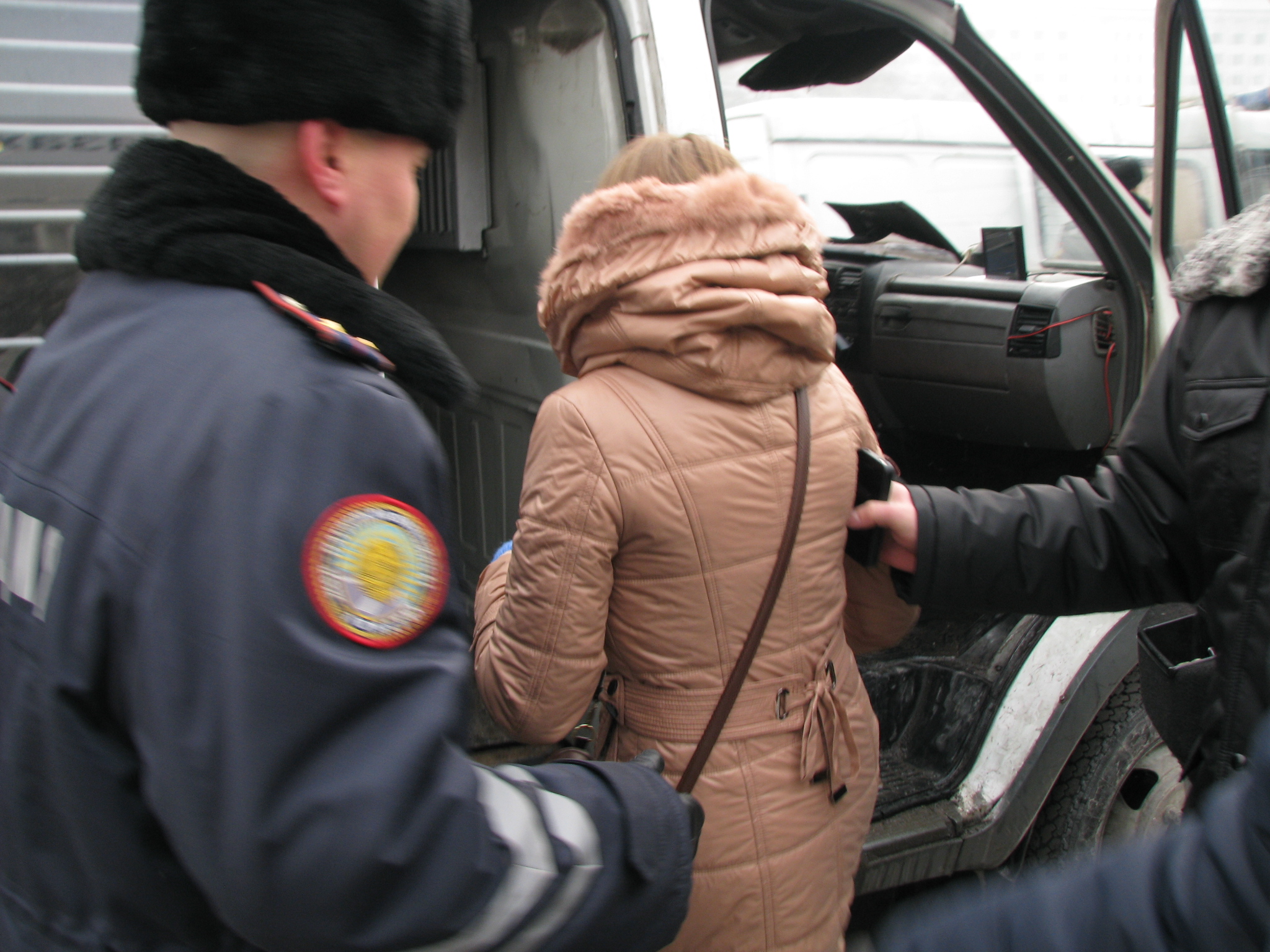
Protestors gathered today in Almaty, Kazakhstan to protest about the 20% devaluation of the tenge on February 11. A few hundred protestors marched from the square by Republic Palace to City Hall but before the demonstrators could reach New Square, police snatch squads moved in to detain around 30 people. For more background, check out this piece on EurasiaNet.org.


A protestor is bundled away by the police in Almaty

A protestor is bundled away by the police in Almaty

Image

Almaty Prosecutor tells crowd to disperse or face arrest for holding a rally without the ten day’s notice required by law – no notice is needed for a devaluation of the tenge.

Image

A protestor is arrested and taken away by the police in Almaty

Image

Nice shades – some KNB head honcho?

Image

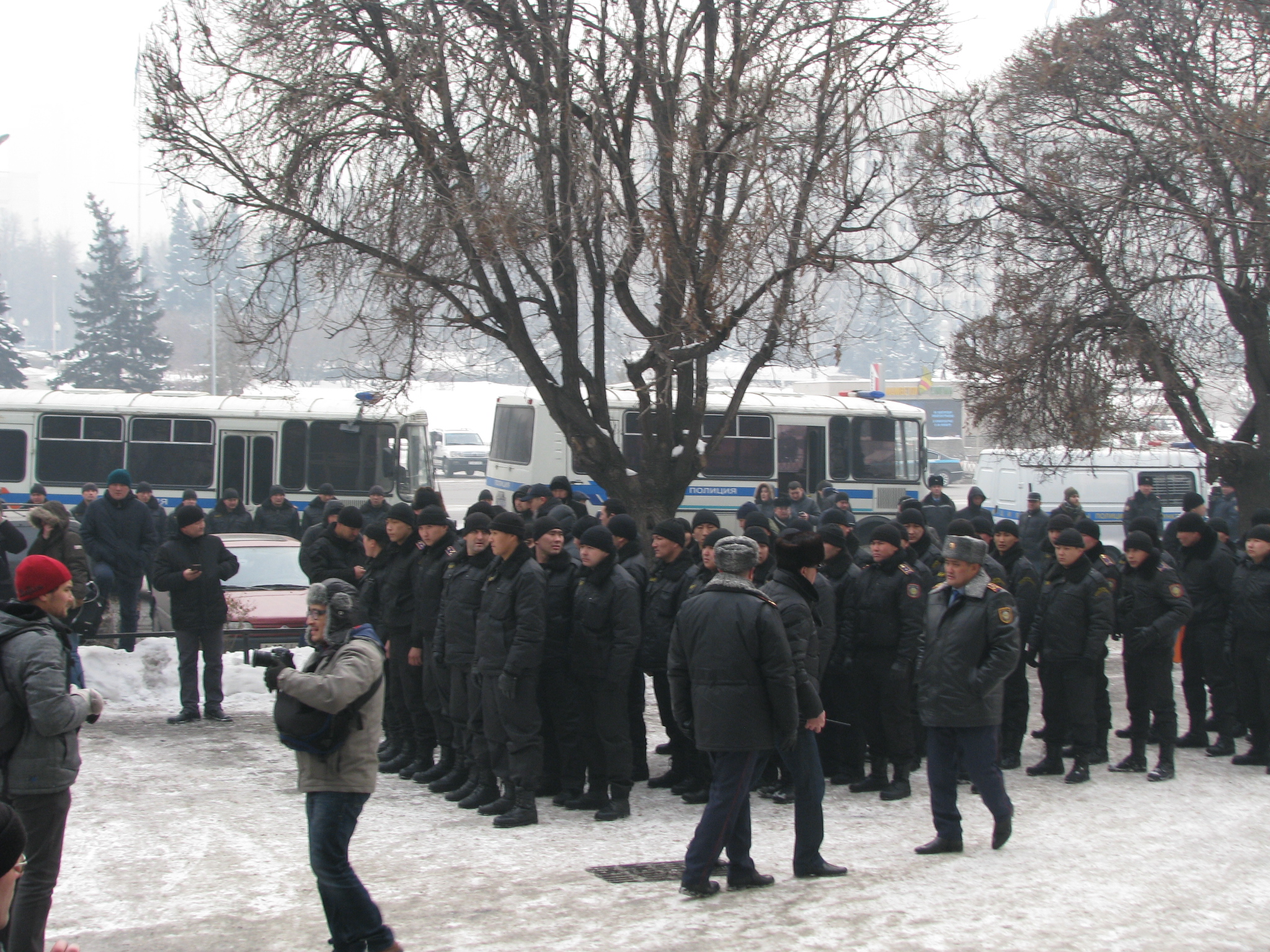
Lines of police ready for lunch after a busy day’s work

Dariga Nazarbayeva – Queen of the Freaks

13 Dec

Whoops – President Nursultan Nazarbayev’s eldest daughter, Dariga, put her foot in it in a spectacular fashion on 11 December when she described disabled children as “freaks”.

Nazarbayeva suggested that teenage pregnancies could be discouraged by arranging school visits to orphanages for children with disabilities – in her strange world these “freaks”, as she refers to the unfortunate inhabitants of the orphanages, are linked to ” an unreasoned, premature sex life”.

Dariga – Queen of the Freaks?

Maybe compulsory viewing in schools of Kazakhstan’s Queen of the Freaks in action would be enough to put people off ever having kids. Dariga would be well-advised to watch Tod Browning’s 1932 classic “Freaks” to see what fate could await her if she continues to make disparaging comments about others.

The Blair Rich Project

16 Nov

The jury is still out over the impact that Tony Blair Associates has had on Kazakhstan over the last two years. The former UK prime minister’s consultancy has been advising Astana on a variety of issues since October 2011 in a project dubbed by some observers as “The Blair Rich Project”.

While many Kazakhstan-watchers have pointed to a worsening of the human rights situation and a widespread crackdown in the country since the December 2011 Zhanaozen riots, when 15 protestors were killed, Tony’s crew has witnessed a somewhat different scene.

Using the rose-tinted spectacles supplied by Astana, Tony Blair Associates (TBA) rejected notions of a crackdown, telling the Guardian: “We simply do not agree that the situation in this regard has deteriorated.”

It seems they hadn’t spotted an opposition leader getting jailed for apparently organising the trouble in Zhanaozen, other dissenting political voices being neutered, the silencing of critical media outlets and a further scaling back of the right to free assembly.

The tw0-year contract has just finished and is supposedly up for renewal, but Lord Venal is sceptical it will be prolonged.

“Astana paid $26 million for the services of TBA and, quite frankly, were expecting a bit more Blair for their bucks,” he told Kazaxia.

Tony has only paid flying visits to Kazakhstan, deputising the work to others in his team as he globetrots around sorting out the planet’s problems.

“For that sort of money, Kazakhstan could have bought a million twitter shares (priced initially at $26 a pop), a bar of Kazakhstan chocolate for every person in the country, or around 20% of the Welsh wizard, Gareth Bale,” Lord Venal added.

Alga Shaky Kangaroos!

1 Oct

Kazakhstan’s Shakhter Karagandy, better known to some UK supporters as the Shaky Kangaroos, is set to make its home debut in the Europa League this Thursday with the visit of Israel’s Maccabi Haifa to the Astana Arena, where Shakhter are playing its home legs. It is the first time a team from Kazakhstan has reached the group stages of Europe’s second tier contest.

Kazaxia is predicting a close run thing with both clubs losing their openers in Group L, with Shakhter losing 2-1 to Greece’s PAOK and Maccabi going down 1-0 at home to Holland’s AZ Alkmaar.

According to Lord Venal, the result will hinge on whether or not Shakhter will be allowed to sacrifice a sheep before the match. It was prevented from doing this before its second leg tie with Scotland’s Glasgow Celtic and subsequently lost 3-0 and failed to qualify for the Champions League.

The match has sparked a lot of interest in Kazakhstan with some fans even prepared to travel overnight by bus from the business hub of Almaty to the capital Astana.

For 20,000 tenge ($130) the bus will take the fans from Almaty’s Central Stadium to the Astana Arena with guaranteed match tickets, before making the 12-hour or so journey back down south. Kazaxia hopes that the trip will be worth it for these die hard fans.

Kazakhstan: Reality vs. Image

18 Jul

Quick now, when’s the last time you read or heard anything about Kazakhstan in the Huffington Post?

I thought so. It was the July 1 story about a Russian rocket crashing in Kazakhstan after its launch (“Russian Rocket Crashes in Kazakhstan After Launch”).

No? Then surely it was the June 30 feature on British PM David Cameron’s trip to Atyrau and Astana to drum up some business for the UK and not discuss human rights too much less it offend his hosts (“David Cameron in Kazakhstan for Trade and Human Rights Talks”).

Not that either? Then it must have been the story about Borat (remember him?) from April 23, 2012 (“Borat Still Boosting Kazakhstan Tourism”).

No matter. The point is that Kazakhstan, a country the size of Western Europe with vast reserves of oil that rose from the ashes of the Soviet Union’s collapse in 1991 and has been ruled forever by Nursultan Nazarbayev, is rarely featured in the Huffington Post unless it’s a negative story or some free positive PR for the authorities in Astana (“Kazakhstan:Image vs. Reality”).

(with thanks to Al Eisele, Editor-at-Large, The Hill)

Kazakhstan Slams UK Over Human Rights

1 Jul

Lord Venal, who was on the unofficial delegation tagging onto UK Prime Minister David Cameron’s visit to Kazakhstan, reports from an Irish bar in the snazzy capital Astana that Cameron sat stony faced as Kazakhstan President Nursultan Nazarbayev lectured him over Britain’s appalling  human rights record.

Citing deals with Saudi Arabia and Bahrain, and concerns over prisoners held in Guantanamo Bay, the Kazakh Leader of the Nation allegedly gave Cameron an uncomfortable audience.

Nazarbayev also apparently mocked the UK’s nascent democracy – Cameron was elected on a mere 36.1% of the vote, whereas Kazakhstan’s president polled 95.6%.

When asked about fictional British detective, Sherlock Holmes, the Leader sheepishly admitted to having watched a Soviet-era version of the detective’s adventures in foggy Albion.

Lord Venal was in town to drum up business for Kleptis petroleum. Having seen his lordship  partake of quite a few pints of Guinness, Kazaxia is unable to vouch for the veracity of the above comments.

Are Central Asian Leaders Merely Mortal, After All?

23 May

Alarming evidence has appeared over recent months that some Central Asian leaders may, in fact, be merely mortal, despite claims to the contrary, as the leaders of Turkmenistan and Uzbekistan both hit the headlines recently with health scares.

When President Berdymuhkamedov took a tumble from his mount in a horse race in which he won an $11 million prize, he also took a fall from the notion that he was, if not immortal, at least a demi-god.

Rumours of Uzbekistan’s President Karimov suffering a heart attack in March set alarm bells ringing that the long-serving president was, after all, prone to the same fate as we mere mortals. Karimov’s health has long been a subject of debate – a few years ago he was apparently at death’s door with leukemia.

In neighbouring Kazakhstan, President Navarbayev only has to hop on to a plane for rumours to start flying that he is going abroad for major surgery, calling into question his status as a potential demi-god.

In the cases of Karimov and Nazarbayev, both are in their 70s so it’s not really surprising that their respective states of health should be of concern . A doctor, contacted by Kazaxia, confirmed that most likely both, as indeed all the leaders, will one day die if it turns out that  they are not immortal.

As for the others, Kyrgyzstan’s President Atambayev allegedly enjoys getting thoroughly mortal on occasion, which rules him out and Tajikistan’s Rahmon is quite possibly immortal, although he will probably achieve his vicarious immortality through the fruit of his loins as has happened in North Korea, Azerbaijan, and Syria, although, of course, his successor should be wary of how things have panned out for President al-Assad.

Kazakhstan: It’s a Clan Thing

20 May

Kazakhstan is positioning itself as wannabe modern democratic state, but in reality life in the country is still underpinned by the zhuz or clan system. This system dates back to the 16th or 17th century and ethnic Kazakhs belong to one of of three clan groupings – the Uly (Senior) Zhuz, the Orta (Middle) Zhuz and the Kishi (Junior) Zhuz.

The clans are further sub-divided into a number of tribes and this provides a network for members of the same tribe to help each other get ahead in life The clans also play an important role in politics, with a number of cabinet ministers hailing from the same clan grouping as President Nursultan Nazarbayev, the Uly Zhuz.

The Uly Zhuz traditionally inhabited the areas around Almaty in the south-east of Kazakhstan, while the Orta Zhuz is located in the north and centre of the country. The Kishi Zhuz inhabits the oil-rich west of Kazakhstan.

Check out this informative graphic for an overview of the clan and tribal system in Kazakhstan. For more on the influence of clans in the political arena, Kazaxia recommends these academic works by Edward Schatz – Modern Clan Politics: The Power of “Blood” in Kazakhstan and Beyond and Sally Cummings  Kazakhstan: Power and the Elite.


Contrasting Marathon Responses in Central Asia

27 Apr

There have been contrasting responses to the Boston marathon bombings in Central Asia. While Uzbekistan has decided to cancel its marathon, Kazakhstan has decided to press ahead with its event in Almaty on 28 April.

The Almaty marathon will begin with a minute of silence for the Boston victims. The charity marathon is being run for the second year running and it’s expected to attract around 5,000 participants.

Meanwhile in Uzbekistan, the organisers pulled the plug on its race because of unspecified security threats. The marathon was being overseen by organisations close to Gulnara Karimova, the eldest daughter of President Islom Karimov.

Instead, a charity concert will be held – although at the time of writing it was not clear if Gulnara’s alter-ego, GooGoosha would be taking to the stage.

These two reactions show the contrasting natures of the Central Asian neighbours – Uzbekistan always plays up threats to its security and is spooked by terrorism, whereas Kazakhstan seems to be opting for the path of not giving in to terrorists.

Kazakhstan Cool on Links with Georgia, Azerbaijan Football League

17 Apr

Could Kazakhstan be on the verge of joining forces with Georgia and Azerbaijan to form a trans-Caspian football league?

If reports from NEWS.am, an Armenian source, are to be believed then the Georgian Football Federation is about to submit plans to the Union of European Football Unions (UEFA) for a super league combining the leagues of Georgia, Azerbaijan and Kazakhstan. It appears that the Armenians are not invited.

The report ends with a denial from the Kazakhstan Football Federation, announcing that it has no plans to join such a league. This is probably a wise move as the travel for away matches would be huge. If, for instance, FC Dinamo Batumi were to face Almaty’s FC Kairat, they would be looking at an 8,600 km round trip. Not a very attractive prospect for either the players or the travelling supporters.

An added complication would be the fact that Kazakhstan’s top division plays its football from March to November, while Georgia and Azerbaijan play in the winter months from September to May.