Archive | Kazakhstan RSS feed for this section

Qoqs’etay’: Shock Arrest of Deaf Pensioner

25 Nov

KNB agents arrested an 87-year-old man for launching wild celebrations this week in his home village near Kokshetau. The unnamed man – who is deaf in both ears – had hung banners from his balcony celebrating the ousting of the president and the dawn of democracy. He had then struggled to the local shop to buy vodka for celebrations.

Screen Shot 2017-11-25 at 18.15.24

Jubilation as President Mugabe steps down

“It’s time for all of us to celebrate the ousting of the dictator after so many decades!” the old man had shouted to bewildered fellow-shoppers, the saleswoman told local TV. “He was also muttering things like ‘the only president since independence’, ‘he locked up anyone who disagreed with him’ and ‘he idiotically even named a university after himself’.” The man then invited all his neighbours to the impromptu party.

“I don’t understand what’s happened,” the man’s elderly wife said, clearly distressed. “All I did was tell him that Zimbabwe’s veteran president Robert Mugabe had been forced to step down. I wasn’t sure he even understood me very well. He’s quite deaf.”

Qazaqstan:Grabbing Brexit by the Horns

24 Nov

24 November 2017

Kazakhstan’s Foreign Minister Kairat Abdrakhmanov popped into London earlier this week to touch base with his UK counterpart Boris Johnson, inventor of the bicycle.

Screen Shot 2017-11-24 at 09.47.04

When Boris met Kairat…

The UK’s foreign secretary was upbeat about the growing trade links between Britain and oil rich Kazakhstan.

“Per capita, Qazaqstanis suck more Fisherman’s Friends than any other Central Asians,” Johnson gloated.

Screen Shot 2017-11-24 at 09.57.44

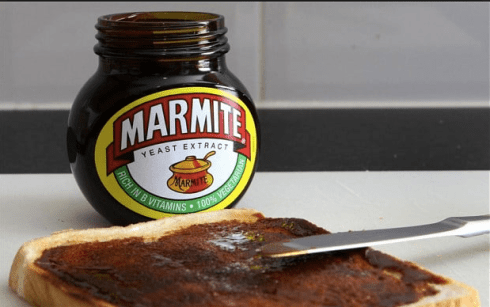
Marmite sales grew by a whopping 50% in Qazaqstan in 2016

Trade has been growing steadily between the two nations, with shortbread and Marmite leading the way – sales of the latter increased 50% in Kazakhstan last year, up from 10 jars in 2015 to 15 in 2016.

Astana is keen to make the most of the golden opportunity of Brexit that will see the UK crash out of the EU in just over a year.

“The future has never been brighter for trade with emerging giants such as Qazaqstan,” a spokesperson from the think tank Free United Kingdom in Transit (Fukit) told kazaxia.


Qazaqstan: Elbasi Gunning for Top 3 Spot

16 Nov

16 November 2017

Astana has been keeping a close eye on events in Zimbabwe with the Leader of the Nation set to become the world’s 4th longest serving leader if Robert Mugabe is forced out of office following Zimbabwe’s coup that was not a coup.

It’s been a momentous year for President Nursultan Nazarbayev, who has ruled independent Qazaqstan for coming on 26 years – in September he crept into the top 5 of longest serving (non-royal) world leaders when Angola’s José Eduardo dos Santos stepped down after 28 years in office.
If Mugabe goes, then Elbasi will be in fourth spot – behind only Iran’s Ali Khameni, 36 years in the top job, Equatorial Guinea’s Teodoro Obiang Nguema Mbasogo, 38 years at the helm and the current longest serving Head of State, Cameroon’s Paul Biya, who has been running the show in this central African country for more than 42 years.

Qazaqstan Latyn A’lipbi’ine Qol Qoiydi

27 Oct

Qazahi’a’ is pleased to announce that after many minutes of public consultation, President Nazarbayev has decided in his wisdom that Qazaqstan’s Latin alphabet will look like this:

Screen Shot 2017-10-27 at 12.44.53

The idea behind the switch from Cyrillic to Latin for the Qazaq language was motivated by a desire to make modern technology more user-friendly for Qazaqs. The Cyrillic alphabet currently uses 42 characters, making it awkward to use on tech devices as it uses up all the keyboard including the space usually used for numbers.

The president’s solution is a slimmed-down 32 letter alphabet using ‘ to modify letters so, for instance, ‘ch’ (a sound imported from Russian) becomes ‘c” and ‘sh’ becomes ‘s”.

Here at Qazahi’a’  we’re not convinced that apostrophes are the way forward, but who cares about that – it’s all been decided, as usual, from the top down.

Kazakhstan: EXPO 2017 Hits and Misses

11 Sep

11 September 2017

With Astana’s EXPO 2017 done and dusted, kazaxia is having a look at some of the hits and misses at Kazakhstan’s window to the world, which was on the theme of Future Energy.

SAMSUNG CSC

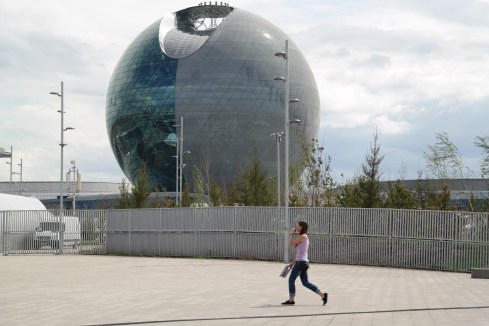
Crowds heading to Nur-Alem aka the Death Star

Top prize, of course, goes to Kazakhstan’s pavilion Nur-Alem, unflatteringly dubbed the Death Star by Foreign Policy. This was the biggest draw of the event with crowds queuing for hours to check out the eight floors of interactive displays on the green energy theme.

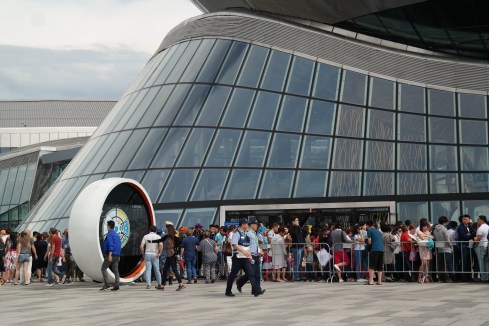
SAMSUNG CSC

Queueing to enter Nur-Alem at EXPO 2017

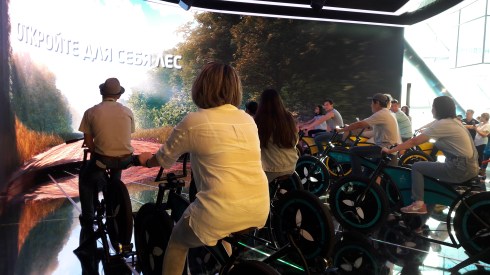
kazaxia’s particular favourite was the pedal-powered  race which saw two teams face off to pedal as fast as they could and generate energy.

20170710_185430

Pedal power face off in Nur-Alem

Special mention goes to Uzbekistan, which fully embraced the Future Energy concept with its Chevrolet (formerly Uz-Daewoo) Matiz adapted to run on a hydrogen-powered fuel cell.

SAMSUNG CSC

Uzbekistan’s fuel-cell powered Matiz

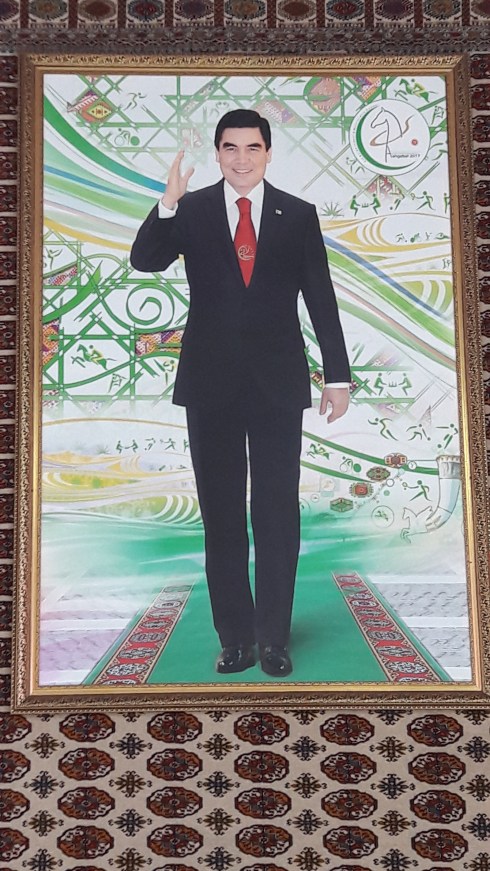
Turkmenistan seemed more intent on pushing President Gurbanguly Berdymukhammedov’s books and the upcoming Asian indoor martial arts fest in Ashgabat.

20170710_162516

A warm welcome to Turkmenistan’s pavilion

Georgia’s pavilion predictably focused on wine production, ignoring the Future Energy message, but the kazaxia special prize was reserved for Russia  with its novel take on the theme – it proposed using nuclear-powered ice breakers to crash through the ice cap to get at the fossil fuel deposits lurking in the depths of the Arctic Ocean.

The EXPO circus now moves on to the UAE leaving Astana with the task of transforming the site into a regional financial centre. Nur-Alem will remain as a museum for the general public to keep riffing on the green energy vibe.

Ashgabat Blues Over Dictatorland

7 Apr

We have received the following missive from an acquaintance of Lord Venal, who recently had cause to be in the Turkmen capital Ashgabat.

Somewhat disappointed by the closing of all nightclubs at an unearthly early hour, he was gratified to receive a personal invitation from President Gurbanguly Berdimuhamedov to drop by at one of his elegant palaces. “After a few drinks, His Excellency pulled out his guitar and treated me and the young ladies present to some of his favourite songs, all written by himself! Knowing I’m from distant Albion, we then settled down to watch the latest BBC production, Dictatorland, which His Excellency enjoyed, but only up to a point. Knowing that a friend from my (rather minor) public school works in the upper echelons of the BBC, he immediately dashed off a letter for me to pass on, which I reproduce below.”

To Director of BBC

London

England

Dear esteemed Sir!

I watched your fine show Dictatorland (thanks to excellent Hola!!) which show success in fellow region leaders in important task keeping order and maintaining popular support and stability in country Kazakhstan, Tajikistan, Belarus. You know these leaders follow me in my example how to keep good order on streets, even if in some way they act very primitive, like dictator of tinpot. We here in Turkmenistan famous not needing to shoot people on street like you showed in Kazakhstan, or beating people. We keep order by kindness and goodness of all police officers and lofty wisdom of president (myself).

So why then BBC not ask to come to Turkmenistan? We do not understand this incomprehensible decision. You only need to address yourself to me I arrange everything for you. See nice things, meet nice people. I let you interview me (but note you don’t ask questions, just stand up and write down everything I say in little notebook). You make good programme very popular around world and give glory to my country.

I look forward I hear from you with offer of coming to Turkmenistan.

Gurbanguly

(President)

Kazakhstan’s Recycled Art

17 Mar

Kazakh artist, Saule Suleimenova, has found a novel way of dealing with some of the masses of plastic bags that litter Kazakhstan – by recycling them into artworks.

20170314_161447

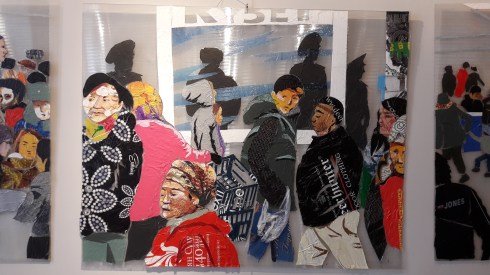
Saule Suleimenova’s ‘Civil Registration Office’ – note the shadowy police figures lurking in the background

Saule Suleimenova’s latest exhibition – called “… Somewhere in the Great Steppe”- features a series of paintings made entirely from discarded plastic items such as carrier bags and tablecloths – the style is known as cellophane painting. To see  how the bags are recycled into paintings, check out this video.


The exhibition opens with images from the steppe across the four seasons and then travels into the city, taking in village life along the way. The collection is part of her ongoing projects I’m Kazakh and Aruakhs (Spirits of Ancestors), which combines  archive images of Kazakhs against a backdrop of present-day scenes.

The themes in this exhibition are bang up to date with a triptych called ‘Civil Registration Office’ which depicts the chaos in registration centres at the start of this year when Kazakhstan introduced new laws to track the movements of its populace and assert its control over this formerly nomadic people.

The exhibition is open daily from 10.00-19.00 in Almaty’s Aurora Space, which is located by the Abay Opera and Ballet Theatre,  on the corner of Baiseitov and Zhambyl Street, but you’ll have to hurry if you want to catch it as it closes on 23 March.


Central Asia: Breaking the 100% Barrier

17 Feb

Presidents in Central Asia have been striving over the past 25 years to break through the mythical 100% of the popular vote threshold in elections. Once believed to be mathematically impossible, experts now think that with advances in technology the day may soon come when politicians can exceed 100% of the vote.

260414-2

Turkmenistan’s President Gurbanguly Berdimuhamedov romped to victory once again with 97.69% of the vote

“As we have seen in recent elections in Central Asia, the incumbents are getting ever closer to the magical figure of 100%. Most recently, President Gurbanguly Berdimuhamedov picked up 97.69% of the vote in Turkmenistan’s elections, held on 12 February,” Lord Venal, a seasoned Central Asian election observer told kazaxia.

“And this was bettered in Kazakhstan in 2015 when President Nursultan Nazarbayev got 97.75%. So, yes, we could soon see the barrier being broken.”

Advances in fixing the vote has meant that scoring more than 100% should not be a problem in the future.

“Ballot stuffing, vote stealing, carousel voting – we’ve all seen these methods used over the years and these methods are becoming more sophisticated. Why not stuff in more votes than there are registered voters, it’s entirely possible,” Gary Kefali, a politics guru told kazaxia.

However, time may be against Nazarbayev – at 76 he may not have too many more chances at growing his vote beyond 98%. Berdimuhamedov, by contrast, is a relative youngster at only 59 and so he could have many more goes at reaching the Holy Grail of electoral success.

Turkmenistan and Kazakhstan’s incumbents offer the best hopes of breaching 100%. Relative newcomer, President Shavkat Mirziyoyev of Uzbekistan picked up 88.61% in 2016.  Tajikistan’s President Emomali Rahmon grabbed only 83.92% of the vote in 2013. In Kyrgyzstan, President Almazbek Atambaev is a long way off as he got a measly 63.2% in 2011, and he won’t be running again anyway.

“President Nazarbayev should be up for election [in 2020?] before President Berdimuhamedov, and I foresee officials doing their utmost to make him the first leader ever to exceed 100% of the popular vote,” Venal concluded.

Castro Provokes Central Asian Personality Cult Crisis

11 Dec

In its first move, the Association of Traditional Rulers has condemned the
late Cuban leader Fidel Castro for “failing to take seriously his
responsibilities as leader, in death as in life”.

The newly-formed Association unites Central Asia’s presidents – Gurbanguly
Berdymukhammedov of Turkmenistan, Nursultan Nazarbayev of Kazakhstan, Emomali
Rahmon of Tajikistan and Almazbek Atambayev of Kyrgyzstan, together with
candidate member Shavkat Mirziyoyev of Uzbekistan.

SAMSUNG CSC

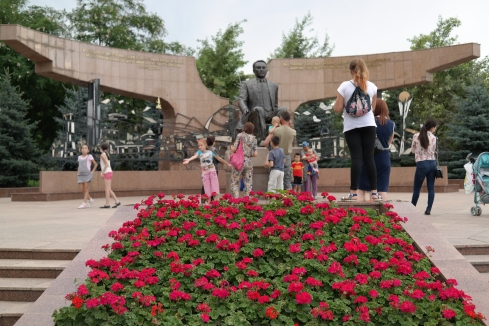
Kazakhstan’s President Nursultan Nazarbayev immortalised in an Almaty park

The Association pointed with regret to remarks at Fidel Castro’s funeral by
his brother and current leader Raul Castro that no monuments, institutions
or streets would be named after the late leader. Nor would statues and busts
be erected in his honour.

“The leader of the revolution strongly opposed any manifestation of cult of
personality,” said Raul Castro.

“The Association upholds the clear duty of all responsible leaders to accept
the burdens of office that history has thrust upon them,” a brief statement
from the Association declared. “Fidel Castro – in his dying wish – has
betrayed that trust.”

The Association insisted that a presidential personality “was not the
property of one lone individual, but belongs to the entire nation,
encapsulating, defining and leading that nation’s very essence, for all
eternity”. It termed any rejection of that lofty responsibility as
“selfishness”.

Central Asia’s leaders have graciously taken on themselves the burden of
having streets, towns or universities named after them, the Association
pointed out, and allowing statues of themselves or their ancestors to
inspire their populations in visible locations. They have also acceded to
popular requests to have portraits of themselves in schools, offices and
other locations.

The Association does however credit the late Cuban leader with adhering to
at least one of the standards of traditional rulers. “Fidel Castro did not
absolve himself of the responsibility to ensure that his close relatives –
and his mistresses – also selflessly took on the burdens of senior
government positions.”

Is a Trump-style Upset on the Cards in Uzbekistan?

2 Dec

2016 has been a year of surprises in the political sphere, and could we be about to see another shock as Uzbekistan goes to the polls on Sunday to elect a successor to its late president Islam Karimov?

As the year comes to a close, kazaxia’s politics guru, Gary Kefali, has been in Tashkent to gauge the mood and he’s found some astounding evidence that another upset could be on the cards.

wp_20161201_17_06_23_pro

Repairing the presidency in Uzbekistan via a four horse race

While all the experts are predicting a walkover for former prime minister Shavkat Mirziyoyev, who is acting president, Kefali’s  straw poll of people he’s bumped into indicates a victory for dark horse candidate, Khatamjon Ketmonov, despite all other signs pointing to red-hot favourite Mirziyoyev.

It would be no surprise if this happened – the year of the monkey has already delivered many shocks – its first surprise was in March when Kazakhstan’s president, Nursultan Nazarbayev, was returned to power with 98% of the popular vote – he’d been widely tipped to get 97%. Then in June, the UK voted to leave the EU, a move that the pollsters and pundits missed.

Fast forward to the USA in November and the cheeky monkey had another trick up its sleeve as Donald Trump lost out to Hilary Clinton in terms of votes cast but still won the presidency, an upset hastened by America’s arcane electoral college system. Again, the pollsters and pundits called it wrong giving Trump little chance of victory.

Lord Venal, who is in Tashkent as an unofficial election observer, has been gauging the mood in the nightclubs of Tashkent – Lord Venal’s impeccable source for keeping his finger on the pulse (literally at times) – is showing an increasing likelihood of a Trump-style upset in Uzbekistan’s 4 December presidential poll.

Lord Venal has heard repeated whingeing about an out-of-touch, self-serving political elite, intent on amassing ever-greater wealth at the expense of the hard-working masses. They have seen their standard of living fall relentlessly as the rich get richer. The elite simply don’t understand the ordinary guy – and even show contempt for him, is the constant refrain. The elite is backed by the Mainstream Media (known here too as the MSM), which relentlessly backs its own.

Calls are growing to “drain the swamp” in Tashkent’s government district. Proposals are increasing heard to build a wall on the border with Kyrgyzstan to keep illegal migrants out. Some have even gone as far as to call to lock up some of the leading candidates.

Lord Venal points out that few correctly predicted that Brexit would triumph in Britain, let alone that Donald Trump could prevail in the US over a tried and tested candidate with years of political and government experience. But if the word in the Tashkent nightclubs can be believed, a similar upset in Uzbekistan is not out of the question.

(Lord Venal adopts a policy of strict neutrality in all elections he monitors. Any hospitality offered by governments plays no role in any assessment he issues. A careful reading of his conclusions on earlier elections will show no influence from visits to restaurants, casinos and nightclubs, or gifts of carpets, caviar or jewellery designed by presidential daughters.)