Tag Archives: Kazakhstan

Kazakhstan: Zharkent’s wooden mosque

26 Sep

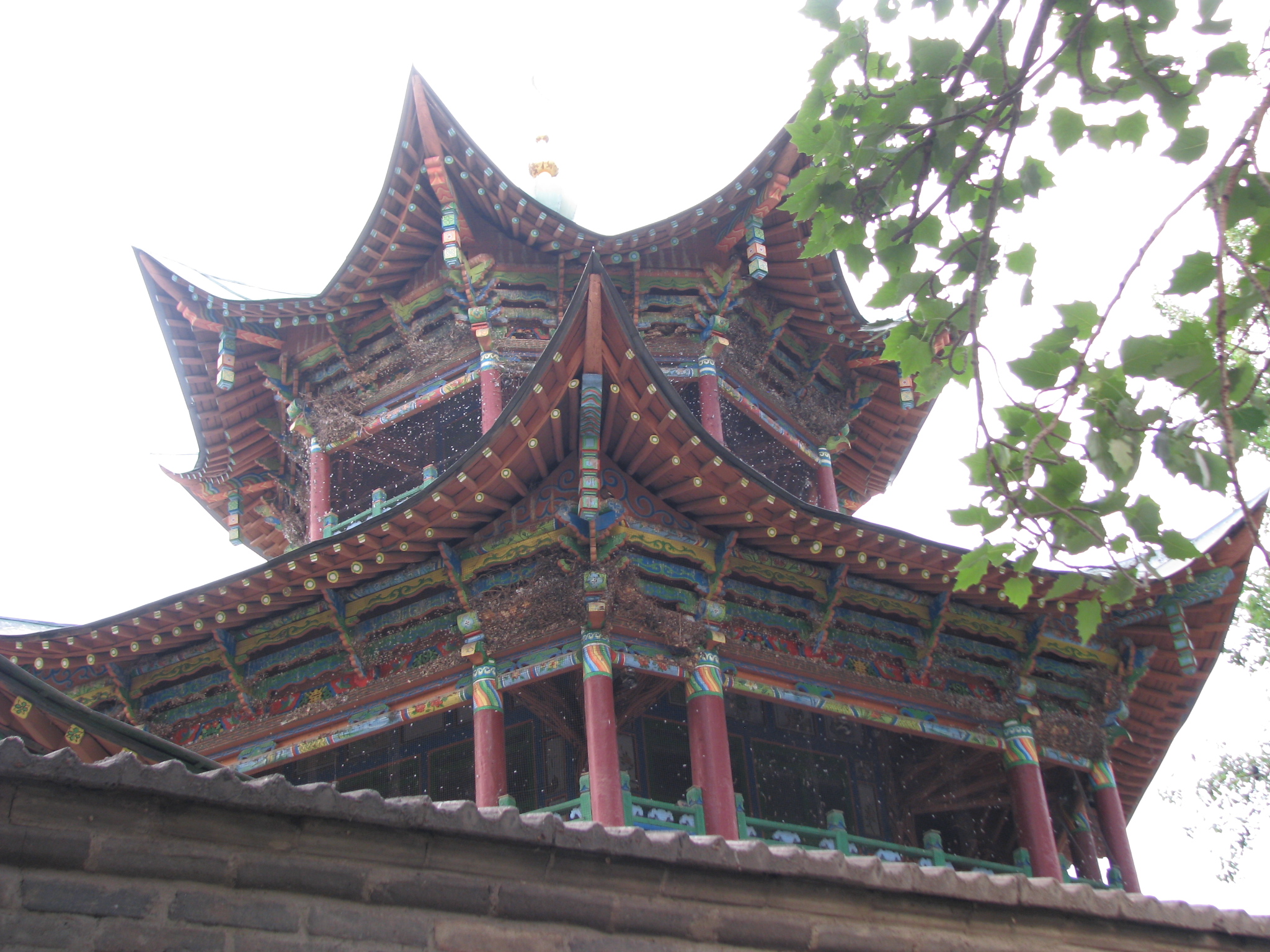
The main entrance to the mosque

The town of Zharkent is the last outpost of any size on the road from Almaty to the Chinese border crossing, Khorgos.  A sleepy backwater in the heart of farming country, Zharkent has one remarkable building – a wooden mosque built in the nineteenth century by a Chinese architect.

The elaborate, Chinese-style decoration of the mosque

The mosque was constructed without the use of nails and has withstood earthquakes and the attentions of the Soviets. The mosque has a gateway reminiscent of the deliacte structures that adorn religious buildings in Kashgar and other parts of Central Asia.

The mosque's central tower with Russian-influenced windows

Inside the courtyard, the mosque itself is a riot of colour with the Chinese influence of architect Hon Pik allowed to run wild. The windows add a Russian-feel. All-in-all it’s a stunning fusion of Central Asian, Chinese and Russian influences.

Night falls on the mosque

Kazakhstan: On the road to China

22 Sep

This slideshow requires JavaScript.

Kazaxia received these great images from the Kazakhstan-China border post of Khorgos, along with some shots of the pot-holed road to China, which is Kazakhstan’s main gateway to the east.

Kazakhstan and China are developing a free trade zone on their border crossing at Khorgos, although the project appears to have stalled for the time being.

As the pictures of the lorry and cafe show, there’s still a lot of work to be done on upgrading the road and providing modern service stations.

Kazakhstan after Nazarbayev: 4. The Long Shots

5 Aug

With rumours whirling around in the last few weeks about the health of Kazakhstan’s long-time president, the focus has once again turned to succession scenarios in Astana.

Kazaxia has decided to gaze into its crystal ball and look at some of the possible frontrunners should the Leader of the Nation decide to call it a day – here’s the fourth and final instalment:

In this part Kazaxia will look at some of the contenders on the fringes of the succession battle.

Dariga Nazarbayeva, the president’s eldest daughter, was at one time considered by many observers to be a shoo-in for the top job. But following the scandal which erupted around her former husband Rakhat Aliyev in 2007, her chances have faded and the president is believed to wonder where her true loyalties lie. It’s unlikely that any sort of door would be left open for Aliyev to return so it looks like she will have to make do with her opera singing.

Karim Masimov, the current Prime Minister, is a capable politician who is well-respected for his role in steering Kazakhstan through the global financial crisis. He’s tech-savvy, as can be seen by his slick website and blog and his presence on twitter. He’s a polyglot – fluent in Kazakh, Mandarin and English.

However, there’s one big question mark over whether he could become president – there’s a widespread, albeit unconfirmed, perception that he is Uyghur, although his father is reported to be Kazakh. Unfortunately, success in politics in Kazakhstan is not always based on merit – ethnic and clan affiliations also play a significant role – and in Kazakhstan only an ethnic Kazakh can realistically hope to become president.

Our last contender for consideration is Kairat Satybaldy, Nazarbayev’s nephew. He was brought up by the president’s family after his father died. Nazarbayev is thought to be close to Satybaldy, who’s in charge of youth policy in Nur Otan, the political party that has all the seats in Kazakhstan’s lower house of parliament. He has also held a top position in the KNB, Kazakhstan’s security service.

He could be the surprise candidate that Nazarbayev has up his sleeve to confound all the Astana watchers. Kazaxia wouldn’t put it past the wily old master politician to pull such a stunt.

So there you have it, Kazaxia’s lowdown on who might succeed President Nazarbayev. As long as the President remains healthy there’s no reason why he should give up his job, so we may have a long wait to see who will follow him. If you have any suggestions as to who the successor might be, please let us know.

Kazakhstan after Nazarbayev: 3. Changing of the Guard

3 Aug

With rumours whirling around in the last few weeks about the health of Kazakhstan’s long-time president, the focus has once again turned to succession scenarios in Astana.

Kazaxia has decided to gaze into its crystal ball and look at some of the possible frontrunners should the Leader of the Nation decide to call it a day – here’s the third instalment:

The Leader may feel its time to make sweeping changes in Kazakhstan with a changing of the guard by handing the reins of power to a younger figure to represent a break with the past. Two candidates spring to mind here – Imangali Tasmagambetov and Kairat Kelimbetov.

Imangali Tasmagambetov (image taken from http://www.astana.kz website)

Imangali Tasmagambetov, the current Mayor of Astana, is a former Prime Minister and Mayor of Almaty. He’s a popular figure, having served both Astana and Almaty well as Mayor. According to some reports, he may even have political principles – he reportedly resigned as PM in 2003 over a rigged vote of confidence in his government.

He cuts a more youthful and urbane figure than many of the grey men of Kazakh politics and has shown a willingness to embrace new technologies by holding Internet conferences and running an interactive page on his mayoral website. Born in 1956, he represents a younger generation in Kazakh politics and has the personality that would be able to push the country forward, if his track record in Almaty and Astnan is anything to go by.

A negative factor could be his perceived aloofness from the electorate. He’s a Kazakh speaker, but comes from a tradition of Kazakh intellectuals and does not come across as a man of the people. He lists as his hobby ‘the problems of history, ethnography and archaeology of Kazakhstan’.

Kazakh nationalists may not forgive him for labelling people protesting the destruction of their homes ‘social outsiders‘ in the 2006 property and land disputes in the Bakay and Shanyrak areas on the outskirts of Almaty. The protestors were in the main Kazakh speakers so were Tasmagambetov to become president, he should not expect as easy a ride as Nazarbayev has had at the hands of the ever more vocal nationalists.

Kairat Kelimbetov

Kairat Kelimbetov (image taken from http://www.weforum.org website)

Kairat Kelimbetov is a dark horse for the top job. Despite being only 42, he has held a number of key positions in Kazakhstan. He is currently the Minster of Economic Development and Trade and prior to that he was head of the state’s Sovereign Wealth Fund Samruk-Kaznya.

Kelimbetov studied at Georgetown University and is often wheeled out to represent Kazakhstan at big economic forums around the world. His strong background in economics and his fluency in English combined with his relative youthfulness makes him an attractive proposition for foreign governments and investors.

He would be the ideal candidate to make a clean break with the past as he is not seen to be too tainted by the Soviet era. However, his not entirely fluent Kazakh language skills may be a disadvantage – but he does have  the charisma to appeal to the electorate. Keep him in mind as a dark horse, though, biding his time while the other candidates fall to political in-fighting.


Kazakhstan after Nazarbayev: 2. The Old Guard

1 Aug

With rumours whirling around in the last few weeks about the health of Kazakhstan’s long-time president, the focus has once again turned to succession scenarios in Astana.

Kazaxia has decided to gaze into its crystal ball and look at some of the possible frontrunners should the Leader of the Nation decide to call it a day – here’s the second instalment:

2. The Old Guard

President Nazarbayev has some long-term lieutenants from the old days who can be trusted to carry out orders and get things done the way the president likes. Under consideration today are two members of the old guard: Nurtay Abykayev and Akhmetzhan Yesimov.

1229090100100100

Nurtay Abykayev (image taken from http://www.wok.kz website)

Abykayev has served Nazarbayev faithfully over the years and has been at various times Ambassador to the Russian Federation and the UK and chairman of the Senate of Kazakhstan. He has had a chequered political career but has always managed to bounce back into power.  He is seen as a safe pair of hands and is currently head of the KNB, the national security agency.

Like Nazarbayev he is from the south of Kazakhstan and is part of the President’s intricate balancing act between the clans from different areas of the country. He is an insider who knows all the ins and outs of Astana politics so would make a good candidate from that point of view.

A negative factor could be his age – he’ll be nearing 70 in 2016 when the next election is slated for. His age and background as a long-term insider may mean he would be resistant to the reforms and changes that some establishment circles feel Kazakhstan needs to make. He would represent a definite continuation of the status quo rather then a break with the past.

Akhmetzhan Yesimov (image taken from http://www.wok.kz website)

Yesimov is another veteran loyalist from the Soviet era. He has a background in farming having worked as the director of a collective farm. He worked his way up through the ranks and was Kazakhstan’s Minister of Agriculture for many years. He is currently Mayor of Almaty, a position he has held since 2008.

During his watch in Almaty he has failed to come to grips with the city’s chronic transport problems.  A possible scenario if he were to run the country could go like this – expect to see Kazakhstan turned into one huge gridlocked road with scant tree cover and a huge cloud of smog enveloping it.

He ticks all the political boxes having served as a Deputy Prime Minister, but again he represents more of a stop-gap throwback to the past rather than the dynamic figure Kazakhstan needs to push it forwards.

Kazakhstan after Nazarbayev: 1. Keep it in the Family

29 Jul

Kazakhstan has long adhered to the principle of ‘one man, one vote’ but what happens if that one man – President Nursultan Nazarbayev – is unable to perform his duties? With rumours whirling around in the last week about the health of Kazakhstan’s long-time president, the focus has once again turned to succession scenarios in Astana.

Having been awarded the title of Leader of the Nation in 2010, the stage has been set for the incumbent to move aside but still control the reins of power. Could we see a situation where he takes everyone by surprise and does a ‘Boris Yeltsin’ and personally anoints his successor? At least he’ll be safe in the knowledge that the new president will not wield any real power while he’s still alive. Whatever he decides, he’s got the job until at least 2016, and with the history of longevity in his family who knows how long he’ll go on.

Kazaxia has decided to gaze into its crystal ball and look at some of the possible frontrunners should the Leader of the Nation decide to call it a day.  Kazaxia will be assessing their chances over the next few days – here’s the first instalment:

1. Keep it in the Family

Timur Kulibayev (Image taken from http://www.samruk-kazyna.kz website)

Current hot favourite is Timur Kulibayev – the ‘keep it in the family’ option. Kulibayev has risen high in the business world of Kazakhstan, possibly with the help of his powerful father-in-law – he’s married to Dinara, Nazarbayev’s middle daughter, and has three children with her. He comes across as a clean-cut family guy (see more on this below) who leads a sporty lifestyle with his passion for golf, skiing and football.

Kulibayev has carved a name for himself in Kazakhstan’s oil and gas industry and has held top positions in many of the state’s big players such as KazMunaiGas.  He is thought to be worth $1.3 billion on the Forbes rich list.

He is currently Chief Executive Officer of Kazakhstan’s powerful Sovereign Wealth Fund Samruk-Kazyna, which controls all state investments and holdings. Click here for a full biography of Kulibayev.

Remarks made recently by presidential advisor Yermukhamet Yertysbayev were interpreted as tipping Kulibayev as a suitable candidate to succeed Nazarbayev to the top job. Both Kulibayev and Yertysbayev were quick to downplay the report, but the fact remains that he would make a good candidate for the ruling family and allow it to keep pulling the strings.

The main obstacles to Kulibayev becoming president are his lack of political experience, his background is strictly business, and his Kazakh language skills – he rarely, if ever speaks in Kazakh in public so there are doubts about his fluency.  It is one thing to pass the language test given to prospective candidates for the presidency, but convincing the electorate is entirely another matter.

A candidate who struggles with the state language would not be popular with the nation’s increasingly influential Kazakh language lobby. This is an issue that is likely to come more to the fore after the current president moves on.

He also has some skeletons  in the cupboard that may not play well with the electorate. He had a long-term affair with Goga Ashkenazi and had a son with her, according to international media outlets. This involvement with Ashkenazi, a Kazakh socialite and businesswoman, doesn’t fit too well with the clean-cut family guy image. There have been accusations of money-laundering and corruption, but the Kazakh financial police cleared him of any wrongdoing.

All-in-all, though, Kulibayev still makes a good candidate. He has time to gain the necessary political skills and brush up his Kazakh. The lovechild may not be too much of a hindrance as this is not known about in Kazakskhstan. Kulibayev can still be regarded as the current favourite.

Tamgaly Petroglyphs – History Etched in Stone

26 Jul

This slideshow requires JavaScript.

The Tamgaly petroglyphs, located in a gorge some 170km north-west of Almaty, are an amazing testament to the long history of human habitation in this isolated corner of Kazakhstan.

The area has been inhabited for around 5,000 years since the late Bronze Age and the thousands of rock carvings trace human development from hunter-gathers who worshipped the sun, via the domestication of horses and camels and the use of bows and arrows, to later inhabitants who led a more settled, pastoral way of life and up to more recent visitors in the twentieth century.

The site is one of three places in Kazakhstan included on the UNESCO World Heritage List – the others being the Khoja Ahmed Yaswai Mausoleum in Turkestan and the Saryarka – Steppe and Lakes of Northern Kazakhstan.

To find out more about the history of these fascinating rock carvings click here.

Kazakhstan: The Samuryk Flies Again

19 Jul

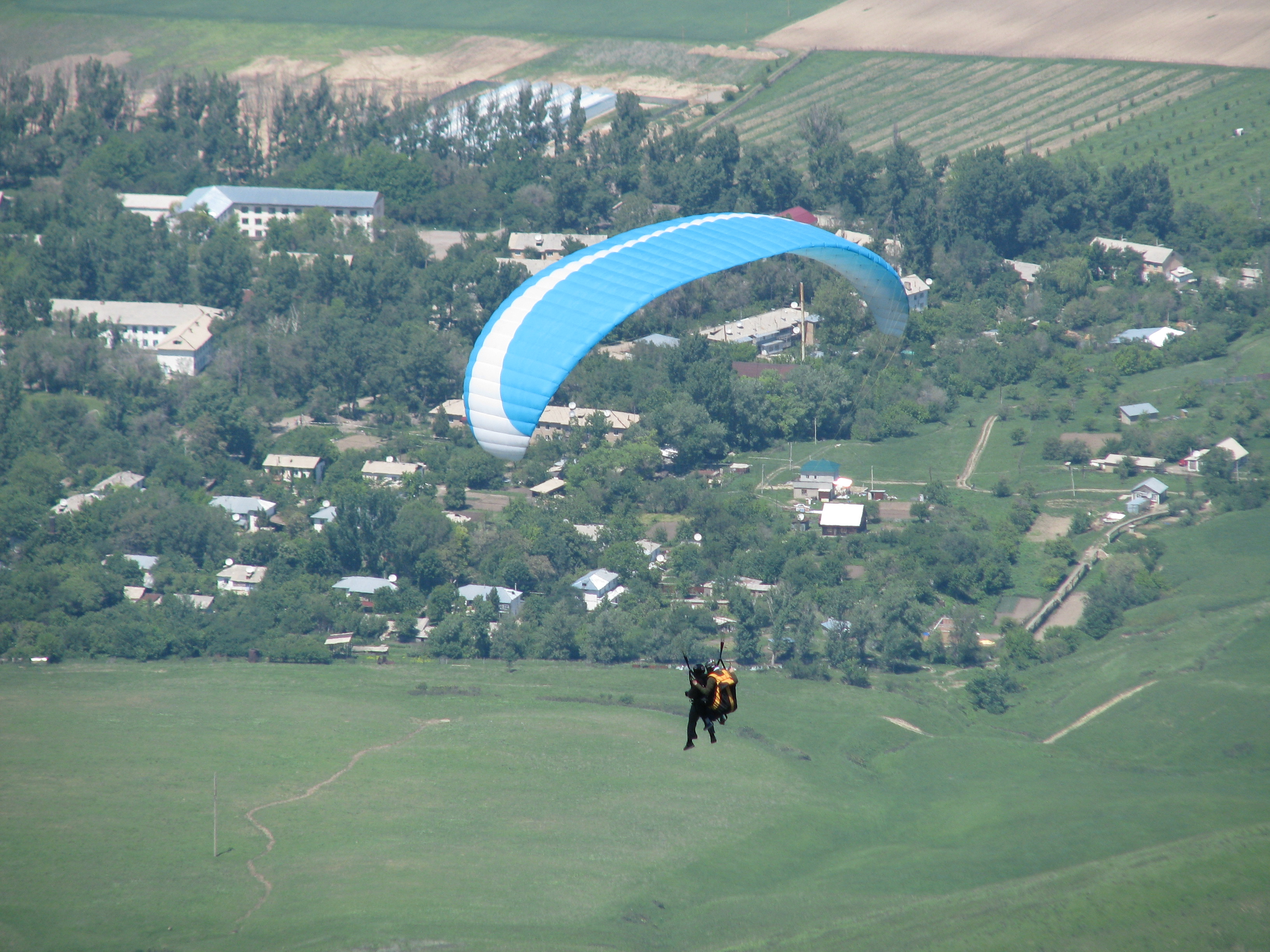
The Samuryk, a phoenix-like bird of Kazakh legend, is taking flight once again – this time in the form of the Samuryk Paragliding club, which meets in the hills above Almaty to evoke the spirit of this mythical bird.

A paraglider takes to the skies at Ush Konyr

Most weekends Almaty’s paragliding fans gather at Ush Konyr, which is located just outside the village of Shamalgan, to soar into the skies off the steep escarpment that towers above the plain that is home to Kazakhstan’s commercial hub. The site is famous across the former Soviet Union with paragliders and is home to many competitions in season.

The Samuryk and its nesting place play a key role in Kazakh mythology. One of the most famous landmarks in Astana is Bayterek, a 97m-tall observation tower built at the centre of its main drag. The glass ball at the top of the structure represents the Samuryk’s egg.

Bayterek, Astsna, Kazakhstan

According to legend, the Samuryk returned every year to lay its egg, representing the sun, in the upper branches of the tree of life known as Bayterek. This egg was then devoured by a dragon, symbolising the eternal rhythm of night replacing day and winter following summer.

Returning to the modern-day Samuryks, this summer will see various competitions taking place at Ush Konyr with it hosting stage 4 of the Russian Open Paragliding Cup 16-21 August, the Open Kazakhstan Championship 22-27 August, and the Open CIS Cup 28 August – 2 September. 

Vino Back as a Contender in Tour de France

5 Jul

Alexander Vinokourov, known by the nickname of Vino, showed today that there was life in the old dog yet as the seasoned Astana team cyclist finished a very commendable third in Stage 4 of the Tour de France. He finished just a hair’s breadth behind former teammate Alberto Contador and the stage winner Cadel Evans.

The result leaves Kazakhstan’s top rider in 18th place overall, although it’s very early days with seventeen gruelling stages to go until the finish on 24 July. Only time will tell if his 37-year-old legs will get him on the rostrum in Paris.

Last year the Astana team, which is bankrolled by Samryk Kazyna, Kazakhstan’s sovereign wealth fund, was victorious with Alberto Contador taking the coveted yellow jersey. But Contador quickly turned villain in Kazakh eyes as he jumped ship to join the Saxo Bank SunGard team.

After his victory,  Contador tested positive for the banned drug clenbuterol. He is currently appealing that decision but if he were to lose that he risks being stripped of last year’s title and this year’s – should he win it.

Vinokourov himself is no stranger to controversy – in 2007 he was kicked off the tour and given a two-year ban over blood-doping offences. At the time he was leading the tour. The Kazakh veteran returned to pro racing in 2009.

Kazakhstan will be watching closely to see if their homegrown hero can keep the flag flying for Astana in this year’s tour.

Sting Proves Astana Party Pooper

4 Jul

It looks like  Sting has taken Kazaxia’s advice, as the veteran British rocker pulled out of his planned concert in Astana, Kazakhstan amid concerns over human rights abuses in the country. He came under pressure from Amnesty International to cancel his show scheduled for 4 July because of the

repression and crackdown against oil workers, their union leaders, their legal representatives and of the human rights NGOs working with them

Sting got into trouble for playing a concert in Uzbekistan for Gulnara Karimova in 2009. Now he seems to have rediscovered his conscience and is once again positioning himself as the great human rights defender.

Earlier in the tour a date in Minsk, Belarus was cancelled, allegedly because of concerns over the economic situation in the country. Surely Lukashenko’s regime is much worse that the relatively benign one in Kazakhstan so it’s strange that Astana is taking the flak over its human rights’ record, whereas Belarus escaped criticism from Amnesty International.

The gig was to have been a central plank of the celebrations for the anniversary of the day Astana became Kazakhstan’s capital, 6 July, which also happens to be the birthday of Kazakh president Nursultan Nazarbayev.

The Leader of the Nation is likely to be not very amused at this latest turn of events and heads could well roll in Astana. His birthday treats have a tendency to fall flat – in 2008 the birthday boy looked on stony-faced as a somewhat tired and emotional looking  Whitney Houston stumbled around the stage.