Tag Archives: Astana

Kazakhstan: Whither Team Astana?

12 Jul

With Alexandre Vinokourov sent crashing out of the Tour de France with a fractured femur, Team Astana has been forced to look to the future. The big-spending days of a few years ago when the team attracted the likes of Alberto Contador and Lance Armstrong seem to be over and the new approach shifts attention to bringing on Kazkhstan’s homegrown talent.

Vinokourov’s career was brought to a sudden end on 10 July by the horrific accident on Stage 9 of the Tour which saw Astana’s team leader hurtle into a ditch at top speed. This tour was to have been his last, but he would have wanted it to end in a less painful style.

The Astana cycling team was set up around Vinokourov in 2007 and is sponsored by Kazakhstan’s Sovereign Wealth Fund Samruk-Kazyna. The cycling team gives Kazakhstan an opportunity to garner itself positive PR on the world stage with its taking part in big-ticket events such as the Tour de France.

After a scandal-hit Tour in 2007, when Vinokourov was forced out of the race after failing a blood-doping test, the team restructured and bought in Contador and Armstrong along with team manager Johan Bruyneel. This brought success in 2009 with the team winning the Tour de France and Contador winning the individual event.

Financing problems, that emerged in May 2009, led to Bruyneel leaving Astana at the end of the season. He took Armstrong and a host of other top riders with him, but Contador stayed and reteined his title in 2010. Contador then jumped ship himself, leaving Vinokourov as the team’s number one.

Now attention is turning to the future and the search is on for the next Vino. On 4 July Kazakhstan’s Cycling Federation announced the formation of Astana-2 which will serve as a feeder team for the main squad. This team will be made up exclusively of young Kazakh riders.

Only time will tell if this new venture can discover a talent to fill the huge gap in Team Astana caused by Vinokourov’s departure or whether Samruk-Kazyna will have to dig deep once again to buy in the riders needed to keep the team at the top of the game.
Vino Back as a Contender in Tour de France

5 Jul

Alexander Vinokourov, known by the nickname of Vino, showed today that there was life in the old dog yet as the seasoned Astana team cyclist finished a very commendable third in Stage 4 of the Tour de France. He finished just a hair’s breadth behind former teammate Alberto Contador and the stage winner Cadel Evans.

The result leaves Kazakhstan’s top rider in 18th place overall, although it’s very early days with seventeen gruelling stages to go until the finish on 24 July. Only time will tell if his 37-year-old legs will get him on the rostrum in Paris.

Last year the Astana team, which is bankrolled by Samryk Kazyna, Kazakhstan’s sovereign wealth fund, was victorious with Alberto Contador taking the coveted yellow jersey. But Contador quickly turned villain in Kazakh eyes as he jumped ship to join the Saxo Bank SunGard team.

After his victory,  Contador tested positive for the banned drug clenbuterol. He is currently appealing that decision but if he were to lose that he risks being stripped of last year’s title and this year’s – should he win it.

Vinokourov himself is no stranger to controversy – in 2007 he was kicked off the tour and given a two-year ban over blood-doping offences. At the time he was leading the tour. The Kazakh veteran returned to pro racing in 2009.

Kazakhstan will be watching closely to see if their homegrown hero can keep the flag flying for Astana in this year’s tour.

Sting Proves Astana Party Pooper

4 Jul

It looks like  Sting has taken Kazaxia’s advice, as the veteran British rocker pulled out of his planned concert in Astana, Kazakhstan amid concerns over human rights abuses in the country. He came under pressure from Amnesty International to cancel his show scheduled for 4 July because of the

repression and crackdown against oil workers, their union leaders, their legal representatives and of the human rights NGOs working with them

Sting got into trouble for playing a concert in Uzbekistan for Gulnara Karimova in 2009. Now he seems to have rediscovered his conscience and is once again positioning himself as the great human rights defender.

Earlier in the tour a date in Minsk, Belarus was cancelled, allegedly because of concerns over the economic situation in the country. Surely Lukashenko’s regime is much worse that the relatively benign one in Kazakhstan so it’s strange that Astana is taking the flak over its human rights’ record, whereas Belarus escaped criticism from Amnesty International.

The gig was to have been a central plank of the celebrations for the anniversary of the day Astana became Kazakhstan’s capital, 6 July, which also happens to be the birthday of Kazakh president Nursultan Nazarbayev.

The Leader of the Nation is likely to be not very amused at this latest turn of events and heads could well roll in Astana. His birthday treats have a tendency to fall flat – in 2008 the birthday boy looked on stony-faced as a somewhat tired and emotional looking  Whitney Houston stumbled around the stage.

Sting hits Kazakhstan

2 Jul

Sting will be returning to Central Asia for a concert on 4July in Astana for the first time since he was stung by a fierce UK press reaction following his concert for Gulnara Karimova in Uzbekistan in 2009.

The concert is part of the ageing rocker’s world tour, called Symphonicity and is timed to coincide with the ongoing celebrations for President Nazarbayev’s birhtday, sorry I meant the anniversary of Astana becoming the capital of Kazakhstan on 6 July.

In honour of the occasion, Kazaxia has penned a little ditty to be sung to the tune of that old Police standard, Roxanne.

‘Oh Sting, you don’t have to play for dictators,
your money’s made now, you’re a billionaire,

Oh Sting, why you wanna sing for dictators,
those days are over, why should you care?’

Kazakhstan Victory Sparks Fury in Baku

6 Jun

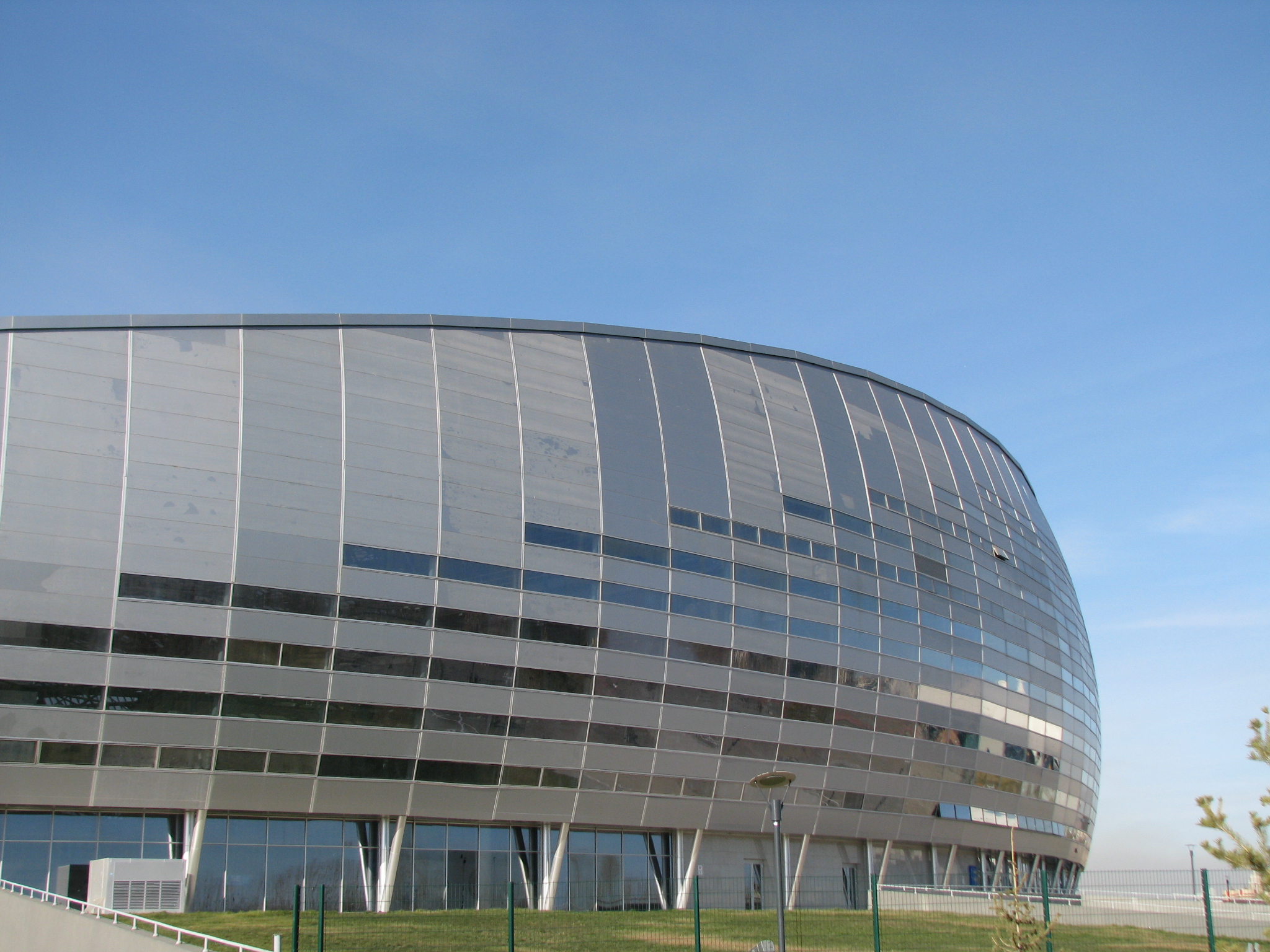
Astana Arena ... the new home of Kazakh football

Football fans in Kazakhstan are in a state of shock after the national team managed to beat Azerbaijan 2-1 in Astana last Friday. The victory gave Kazakhstan its first points in attempting to qualify for Euro 2012. In its five previous outings, the Kazakhs had failed to even score a goal.

Across the Caspian Sea in Baku, the reaction was one of anger at Azerbaijan manager Berti Vogts, who had toilet paper thrown at him at a press conference on his return from Kazakhstan. He was also presented with a ceremonial pitcher used for ritual ablutions.

There were other reports that Vogts had an ’emotional conversation’ with head of Azeri football Rovnag Abdullayev on his return to Baku. This result was a blow to the pride of the Azeris who now find themselves in a desperate struggle with the Kazakhs for the wooden spoon.

On the night in Astana, Kazakhstan’s hero was Sergei Gridin,  who was making his international debut He marked the occasion in great style with two second-half goals. The 24-year-old is a midfielder with FC Tobol Kostanay, who won the Kazakhstan league in 2010.

Vogts’s charges now have to play Germany on 7 June on home soil. When the teams met in Cologne in September 2010, the Azeris suffered a 6-1 defeat, so things do not look too bright for Vogts’s future on the shores of the Caspian Sea.

Kazakhstan: A Young Country on the Threshold of Maturity

29 Apr

Thanks are due once again to Lord Venal who has contributed this opinionated piece to Kazaxia.

This December will see the twentieth anniversary of the epic struggle of Kazakhstan to gain its independence from the Soviet Union. In just 20 short years the country has managed a truly amazing turnaround to become the economic powerhouse of Central Asia and the undisputed champion of democracy in the region.

I feel that it is high time that the world stood up and took notice of these achievements. Kazakhstan, which likes to describe itself as a ‘young country’, should be recognised as the mature country it has bloomed into and inducted into the ranks of GoGUN (The Group of Grown-Up Nations) without any further ado. Then Kazakhstan’s politicians can stop banging on about it being a ‘young country’ and start taking some responsibility for their own actions.

Like any adolescent, Kazakhstan has spent hours in front of the mirror agonising over its image. It has lavished considerable sums on brushing up this image with glossy spreads appearing in international media outlets and is now seen around the world as a maturing, go-ahead nation with a very bright future.

Kazakhstan’s politicians often talk about it being a ‘young country’ but this should not mask the remarkable steps that have taken place in its short lifetime. From inauspicious beginnings, the economic miracle led by President Nursultan Nazarbayev has helped ensure the country’s smooth transition to a market economy.

On the political front there has been unprecedented stability with one leader occupying the highest office in the land for all those 20 years and as the recent elections showed his popularity is in no way diminished after he received an amazing 95.55% of the popular vote in April 2011.

Let’s compare this with other ‘young countries’ that emerged from the ashes of the Soviet Union. If we look at Lithuania we will see it has had a chaotic transition with no less than seven presidents since 1990. One of those, Rolandas Paksas, was impeached and removed from office in 2004. Estonia has fared little better with three presidents thus far.

Kazakhstan is a founder member of the up-and-coming Customs Union with Russia and Belarus, in stark contrast all that Lithuania and Estonia could come up with is membership of the debt-ridden European Union.

Kazakhstan is increasingly being seen as a leader on the world stage. It is lucky for the Organization of the Islamic Conference that Astana will chair this august body from late June. With the Arab world torn asunder by rebellions, Kazakhstan’s valuable experience as head of the OSCE in 2010 will hold it in fine stead here. After successfully dealing with the crisis on its doorstep in Kyrgyzstan last year, there is no better choice to lead the Islamic world on the path to reconciliation and stability.