Archive | Astana RSS feed for this section

Kazakhstan after Nazarbayev: 2. The Old Guard

1 Aug

With rumours whirling around in the last few weeks about the health of Kazakhstan’s long-time president, the focus has once again turned to succession scenarios in Astana.

Kazaxia has decided to gaze into its crystal ball and look at some of the possible frontrunners should the Leader of the Nation decide to call it a day – here’s the second instalment:

2. The Old Guard

President Nazarbayev has some long-term lieutenants from the old days who can be trusted to carry out orders and get things done the way the president likes. Under consideration today are two members of the old guard: Nurtay Abykayev and Akhmetzhan Yesimov.

1229090100100100

Nurtay Abykayev (image taken from http://www.wok.kz website)

Abykayev has served Nazarbayev faithfully over the years and has been at various times Ambassador to the Russian Federation and the UK and chairman of the Senate of Kazakhstan. He has had a chequered political career but has always managed to bounce back into power.  He is seen as a safe pair of hands and is currently head of the KNB, the national security agency.

Like Nazarbayev he is from the south of Kazakhstan and is part of the President’s intricate balancing act between the clans from different areas of the country. He is an insider who knows all the ins and outs of Astana politics so would make a good candidate from that point of view.

A negative factor could be his age – he’ll be nearing 70 in 2016 when the next election is slated for. His age and background as a long-term insider may mean he would be resistant to the reforms and changes that some establishment circles feel Kazakhstan needs to make. He would represent a definite continuation of the status quo rather then a break with the past.

Akhmetzhan Yesimov (image taken from http://www.wok.kz website)

Yesimov is another veteran loyalist from the Soviet era. He has a background in farming having worked as the director of a collective farm. He worked his way up through the ranks and was Kazakhstan’s Minister of Agriculture for many years. He is currently Mayor of Almaty, a position he has held since 2008.

During his watch in Almaty he has failed to come to grips with the city’s chronic transport problems.  A possible scenario if he were to run the country could go like this – expect to see Kazakhstan turned into one huge gridlocked road with scant tree cover and a huge cloud of smog enveloping it.

He ticks all the political boxes having served as a Deputy Prime Minister, but again he represents more of a stop-gap throwback to the past rather than the dynamic figure Kazakhstan needs to push it forwards.

Kazakhstan after Nazarbayev: 1. Keep it in the Family

29 Jul

Kazakhstan has long adhered to the principle of ‘one man, one vote’ but what happens if that one man – President Nursultan Nazarbayev – is unable to perform his duties? With rumours whirling around in the last week about the health of Kazakhstan’s long-time president, the focus has once again turned to succession scenarios in Astana.

Having been awarded the title of Leader of the Nation in 2010, the stage has been set for the incumbent to move aside but still control the reins of power. Could we see a situation where he takes everyone by surprise and does a ‘Boris Yeltsin’ and personally anoints his successor? At least he’ll be safe in the knowledge that the new president will not wield any real power while he’s still alive. Whatever he decides, he’s got the job until at least 2016, and with the history of longevity in his family who knows how long he’ll go on.

Kazaxia has decided to gaze into its crystal ball and look at some of the possible frontrunners should the Leader of the Nation decide to call it a day.  Kazaxia will be assessing their chances over the next few days – here’s the first instalment:

1. Keep it in the Family

Timur Kulibayev (Image taken from http://www.samruk-kazyna.kz website)

Current hot favourite is Timur Kulibayev – the ‘keep it in the family’ option. Kulibayev has risen high in the business world of Kazakhstan, possibly with the help of his powerful father-in-law – he’s married to Dinara, Nazarbayev’s middle daughter, and has three children with her. He comes across as a clean-cut family guy (see more on this below) who leads a sporty lifestyle with his passion for golf, skiing and football.

Kulibayev has carved a name for himself in Kazakhstan’s oil and gas industry and has held top positions in many of the state’s big players such as KazMunaiGas.  He is thought to be worth $1.3 billion on the Forbes rich list.

He is currently Chief Executive Officer of Kazakhstan’s powerful Sovereign Wealth Fund Samruk-Kazyna, which controls all state investments and holdings. Click here for a full biography of Kulibayev.

Remarks made recently by presidential advisor Yermukhamet Yertysbayev were interpreted as tipping Kulibayev as a suitable candidate to succeed Nazarbayev to the top job. Both Kulibayev and Yertysbayev were quick to downplay the report, but the fact remains that he would make a good candidate for the ruling family and allow it to keep pulling the strings.

The main obstacles to Kulibayev becoming president are his lack of political experience, his background is strictly business, and his Kazakh language skills – he rarely, if ever speaks in Kazakh in public so there are doubts about his fluency.  It is one thing to pass the language test given to prospective candidates for the presidency, but convincing the electorate is entirely another matter.

A candidate who struggles with the state language would not be popular with the nation’s increasingly influential Kazakh language lobby. This is an issue that is likely to come more to the fore after the current president moves on.

He also has some skeletons  in the cupboard that may not play well with the electorate. He had a long-term affair with Goga Ashkenazi and had a son with her, according to international media outlets. This involvement with Ashkenazi, a Kazakh socialite and businesswoman, doesn’t fit too well with the clean-cut family guy image. There have been accusations of money-laundering and corruption, but the Kazakh financial police cleared him of any wrongdoing.

All-in-all, though, Kulibayev still makes a good candidate. He has time to gain the necessary political skills and brush up his Kazakh. The lovechild may not be too much of a hindrance as this is not known about in Kazakskhstan. Kulibayev can still be regarded as the current favourite.

Kazakhstan: The Samuryk Flies Again

19 Jul

The Samuryk, a phoenix-like bird of Kazakh legend, is taking flight once again – this time in the form of the Samuryk Paragliding club, which meets in the hills above Almaty to evoke the spirit of this mythical bird.

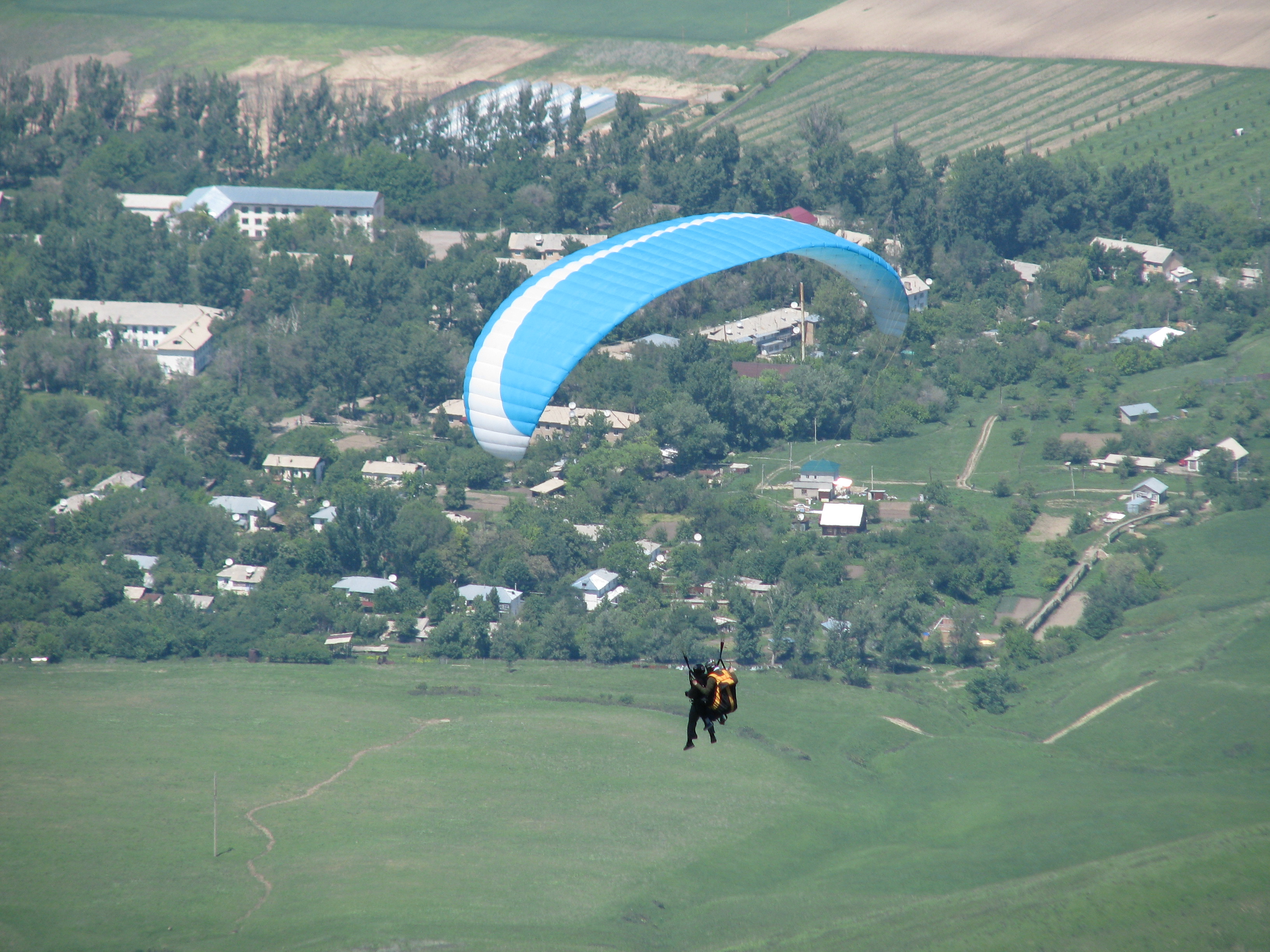
A paraglider takes to the skies at Ush Konyr

Most weekends Almaty’s paragliding fans gather at Ush Konyr, which is located just outside the village of Shamalgan, to soar into the skies off the steep escarpment that towers above the plain that is home to Kazakhstan’s commercial hub. The site is famous across the former Soviet Union with paragliders and is home to many competitions in season.

The Samuryk and its nesting place play a key role in Kazakh mythology. One of the most famous landmarks in Astana is Bayterek, a 97m-tall observation tower built at the centre of its main drag. The glass ball at the top of the structure represents the Samuryk’s egg.

Bayterek, Astsna, Kazakhstan

According to legend, the Samuryk returned every year to lay its egg, representing the sun, in the upper branches of the tree of life known as Bayterek. This egg was then devoured by a dragon, symbolising the eternal rhythm of night replacing day and winter following summer.

Returning to the modern-day Samuryks, this summer will see various competitions taking place at Ush Konyr with it hosting stage 4 of the Russian Open Paragliding Cup 16-21 August, the Open Kazakhstan Championship 22-27 August, and the Open CIS Cup 28 August – 2 September. 

Kazakhstan: Whither Team Astana?

12 Jul

With Alexandre Vinokourov sent crashing out of the Tour de France with a fractured femur, Team Astana has been forced to look to the future. The big-spending days of a few years ago when the team attracted the likes of Alberto Contador and Lance Armstrong seem to be over and the new approach shifts attention to bringing on Kazkhstan’s homegrown talent.

Vinokourov’s career was brought to a sudden end on 10 July by the horrific accident on Stage 9 of the Tour which saw Astana’s team leader hurtle into a ditch at top speed. This tour was to have been his last, but he would have wanted it to end in a less painful style.

The Astana cycling team was set up around Vinokourov in 2007 and is sponsored by Kazakhstan’s Sovereign Wealth Fund Samruk-Kazyna. The cycling team gives Kazakhstan an opportunity to garner itself positive PR on the world stage with its taking part in big-ticket events such as the Tour de France.

After a scandal-hit Tour in 2007, when Vinokourov was forced out of the race after failing a blood-doping test, the team restructured and bought in Contador and Armstrong along with team manager Johan Bruyneel. This brought success in 2009 with the team winning the Tour de France and Contador winning the individual event.

Financing problems, that emerged in May 2009, led to Bruyneel leaving Astana at the end of the season. He took Armstrong and a host of other top riders with him, but Contador stayed and reteined his title in 2010. Contador then jumped ship himself, leaving Vinokourov as the team’s number one.

Now attention is turning to the future and the search is on for the next Vino. On 4 July Kazakhstan’s Cycling Federation announced the formation of Astana-2 which will serve as a feeder team for the main squad. This team will be made up exclusively of young Kazakh riders.

Only time will tell if this new venture can discover a talent to fill the huge gap in Team Astana caused by Vinokourov’s departure or whether Samruk-Kazyna will have to dig deep once again to buy in the riders needed to keep the team at the top of the game.

Vino Back as a Contender in Tour de France

5 Jul

Alexander Vinokourov, known by the nickname of Vino, showed today that there was life in the old dog yet as the seasoned Astana team cyclist finished a very commendable third in Stage 4 of the Tour de France. He finished just a hair’s breadth behind former teammate Alberto Contador and the stage winner Cadel Evans.

The result leaves Kazakhstan’s top rider in 18th place overall, although it’s very early days with seventeen gruelling stages to go until the finish on 24 July. Only time will tell if his 37-year-old legs will get him on the rostrum in Paris.

Last year the Astana team, which is bankrolled by Samryk Kazyna, Kazakhstan’s sovereign wealth fund, was victorious with Alberto Contador taking the coveted yellow jersey. But Contador quickly turned villain in Kazakh eyes as he jumped ship to join the Saxo Bank SunGard team.

After his victory,  Contador tested positive for the banned drug clenbuterol. He is currently appealing that decision but if he were to lose that he risks being stripped of last year’s title and this year’s – should he win it.

Vinokourov himself is no stranger to controversy – in 2007 he was kicked off the tour and given a two-year ban over blood-doping offences. At the time he was leading the tour. The Kazakh veteran returned to pro racing in 2009.

Kazakhstan will be watching closely to see if their homegrown hero can keep the flag flying for Astana in this year’s tour.

Sting Proves Astana Party Pooper

4 Jul

It looks like  Sting has taken Kazaxia’s advice, as the veteran British rocker pulled out of his planned concert in Astana, Kazakhstan amid concerns over human rights abuses in the country. He came under pressure from Amnesty International to cancel his show scheduled for 4 July because of the

repression and crackdown against oil workers, their union leaders, their legal representatives and of the human rights NGOs working with them

Sting got into trouble for playing a concert in Uzbekistan for Gulnara Karimova in 2009. Now he seems to have rediscovered his conscience and is once again positioning himself as the great human rights defender.

Earlier in the tour a date in Minsk, Belarus was cancelled, allegedly because of concerns over the economic situation in the country. Surely Lukashenko’s regime is much worse that the relatively benign one in Kazakhstan so it’s strange that Astana is taking the flak over its human rights’ record, whereas Belarus escaped criticism from Amnesty International.

The gig was to have been a central plank of the celebrations for the anniversary of the day Astana became Kazakhstan’s capital, 6 July, which also happens to be the birthday of Kazakh president Nursultan Nazarbayev.

The Leader of the Nation is likely to be not very amused at this latest turn of events and heads could well roll in Astana. His birthday treats have a tendency to fall flat – in 2008 the birthday boy looked on stony-faced as a somewhat tired and emotional looking  Whitney Houston stumbled around the stage.

Sting hits Kazakhstan

2 Jul

Sting will be returning to Central Asia for a concert on 4July in Astana for the first time since he was stung by a fierce UK press reaction following his concert for Gulnara Karimova in Uzbekistan in 2009.

The concert is part of the ageing rocker’s world tour, called Symphonicity and is timed to coincide with the ongoing celebrations for President Nazarbayev’s birhtday, sorry I meant the anniversary of Astana becoming the capital of Kazakhstan on 6 July.

In honour of the occasion, Kazaxia has penned a little ditty to be sung to the tune of that old Police standard, Roxanne.

‘Oh Sting, you don’t have to play for dictators,
your money’s made now, you’re a billionaire,

Oh Sting, why you wanna sing for dictators,
those days are over, why should you care?’

Kazakhstan Victory Sparks Fury in Baku

6 Jun

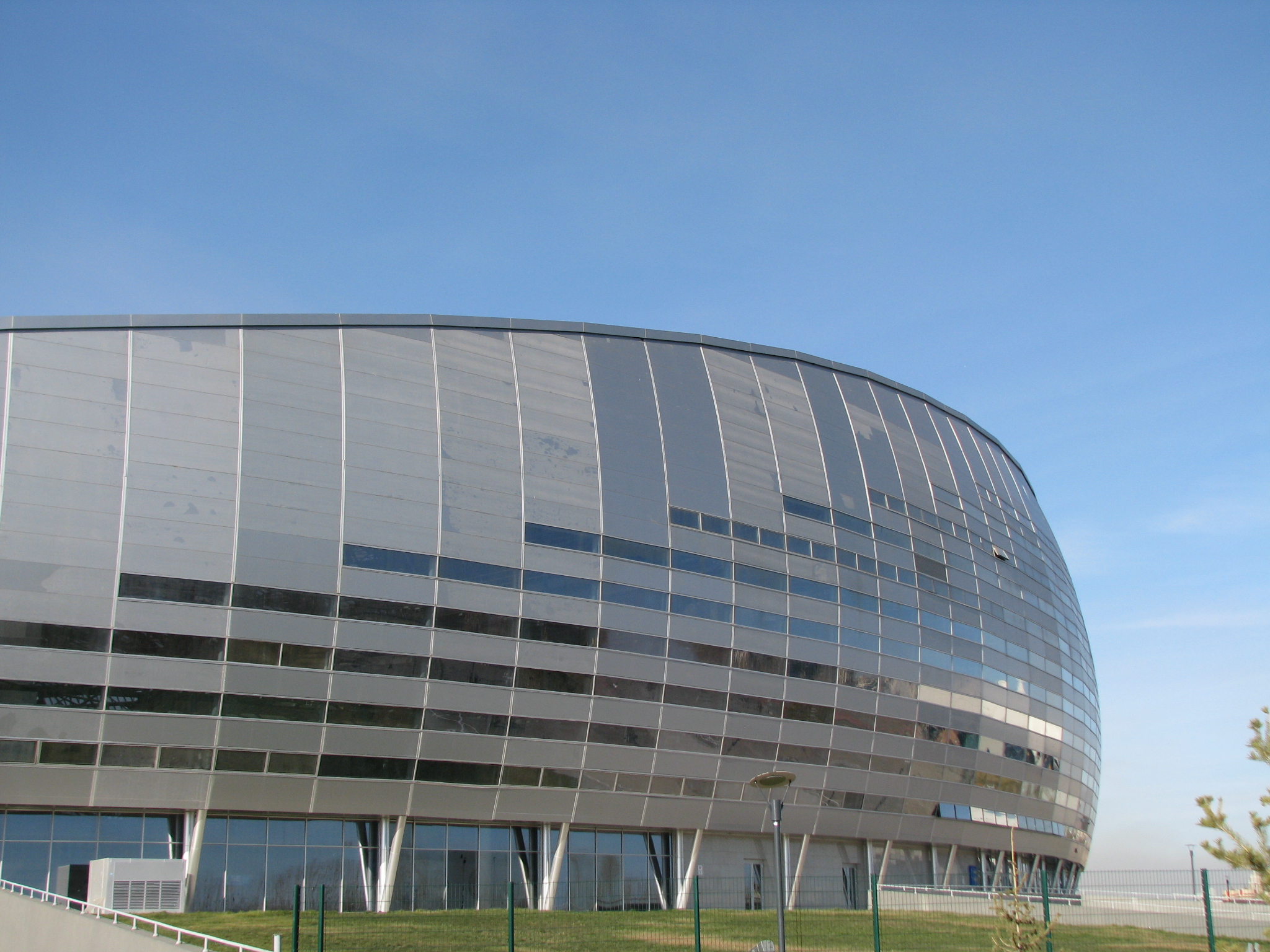
Astana Arena ... the new home of Kazakh football

Football fans in Kazakhstan are in a state of shock after the national team managed to beat Azerbaijan 2-1 in Astana last Friday. The victory gave Kazakhstan its first points in attempting to qualify for Euro 2012. In its five previous outings, the Kazakhs had failed to even score a goal.

Across the Caspian Sea in Baku, the reaction was one of anger at Azerbaijan manager Berti Vogts, who had toilet paper thrown at him at a press conference on his return from Kazakhstan. He was also presented with a ceremonial pitcher used for ritual ablutions.

There were other reports that Vogts had an ’emotional conversation’ with head of Azeri football Rovnag Abdullayev on his return to Baku. This result was a blow to the pride of the Azeris who now find themselves in a desperate struggle with the Kazakhs for the wooden spoon.

On the night in Astana, Kazakhstan’s hero was Sergei Gridin,  who was making his international debut He marked the occasion in great style with two second-half goals. The 24-year-old is a midfielder with FC Tobol Kostanay, who won the Kazakhstan league in 2010.

Vogts’s charges now have to play Germany on 7 June on home soil. When the teams met in Cologne in September 2010, the Azeris suffered a 6-1 defeat, so things do not look too bright for Vogts’s future on the shores of the Caspian Sea.

Kazakhstan: A Young Country on the Threshold of Maturity

29 Apr

Thanks are due once again to Lord Venal who has contributed this opinionated piece to Kazaxia.

This December will see the twentieth anniversary of the epic struggle of Kazakhstan to gain its independence from the Soviet Union. In just 20 short years the country has managed a truly amazing turnaround to become the economic powerhouse of Central Asia and the undisputed champion of democracy in the region.

I feel that it is high time that the world stood up and took notice of these achievements. Kazakhstan, which likes to describe itself as a ‘young country’, should be recognised as the mature country it has bloomed into and inducted into the ranks of GoGUN (The Group of Grown-Up Nations) without any further ado. Then Kazakhstan’s politicians can stop banging on about it being a ‘young country’ and start taking some responsibility for their own actions.

Like any adolescent, Kazakhstan has spent hours in front of the mirror agonising over its image. It has lavished considerable sums on brushing up this image with glossy spreads appearing in international media outlets and is now seen around the world as a maturing, go-ahead nation with a very bright future.

Kazakhstan’s politicians often talk about it being a ‘young country’ but this should not mask the remarkable steps that have taken place in its short lifetime. From inauspicious beginnings, the economic miracle led by President Nursultan Nazarbayev has helped ensure the country’s smooth transition to a market economy.

On the political front there has been unprecedented stability with one leader occupying the highest office in the land for all those 20 years and as the recent elections showed his popularity is in no way diminished after he received an amazing 95.55% of the popular vote in April 2011.

Let’s compare this with other ‘young countries’ that emerged from the ashes of the Soviet Union. If we look at Lithuania we will see it has had a chaotic transition with no less than seven presidents since 1990. One of those, Rolandas Paksas, was impeached and removed from office in 2004. Estonia has fared little better with three presidents thus far.

Kazakhstan is a founder member of the up-and-coming Customs Union with Russia and Belarus, in stark contrast all that Lithuania and Estonia could come up with is membership of the debt-ridden European Union.

Kazakhstan is increasingly being seen as a leader on the world stage. It is lucky for the Organization of the Islamic Conference that Astana will chair this august body from late June. With the Arab world torn asunder by rebellions, Kazakhstan’s valuable experience as head of the OSCE in 2010 will hold it in fine stead here. After successfully dealing with the crisis on its doorstep in Kyrgyzstan last year, there is no better choice to lead the Islamic world on the path to reconciliation and stability.

Kazakhstan: Diary of an Election Observer

12 Apr

Kazaxia has received the following contribution from Britain’s Lord Venal, who was recently in Kazakhstan to observe the presidential elections.

I have just returned from observing the elections in Kazakhstan’s marvellous new capital Astana and I feel compelled to put pen to paper to extol the great steps this young nation has taken in building a vibrant democracy in just 20 short years.

On election day I was kindly provided with a car and driver by the authorities so I could visit as many polling stations as possible. From what I observed in these polling stations, there is a great deal that my own country could learn in how to run an election.

At each polling station I was greeted by officials and was allowed to observe close up how free and fair these elections were. There were presents on offer for the first people to arrive – I myself was given a rather fine pair of rose-tinted spectacles. It was truly heartening to see so many bright-eyed and bushy-tailed students queuing up to vote at seven in the morning. Can you imagine our lazy teenagers in Britain getting up so early on election day – and on a Sunday at that?

After watching a few people cast their votes, we were treated to a splendid feast with a table groaning with horsemeat sausage and the national dish besbarmak, a delightful combination of choice cuts of meat and sheets of pasta. This was washed down with some vodka shots that left me quite bleary-headed.

It wasn’t all feasting, though. My government-provided interpreter worked selflessly to give me the views of her fellow citizens, who all told me unanimously how pleased they were with the stability and prosperity their leader had brought to the country. She herself was a volunteer from the Nur Otan party, the only party that is represented in the country’s parliament.

As the polls closed, I was relieved to be driven back to my $500 a night suite at the Rixos Hotel as I was ready to burst and a bit tired and emotional after all that exemplary Kazakh hospitality.

The next day I was taken on a tour of Kazakhstan’s breathtaking new capital and saw a spontaneous display of support for President Nazarbayev in a local sports hall as he celebrated his astounding victory with hundreds of students.

The turnout, at around 90%, was phenomenal, which shows how successful Kazakhstan has been in creating its democracy. The huge majority for the President illustrates how popular Mr Nazarbayev is with the electorate. In Britain we can only dream about such turnout figures and levels of support for our politicians. I heartily endorse my fellow observer Daniel Witt, who put it thus:

Kazakhs turned out in droves on April 3 to re-elect President Nursultan Nazarbayev to another, five-year term. The overwhelming, 95.54 percent vote for him was not only an affirmation of Nazarbayev’s popularity but an indication of the electorate’s satisfaction with the direction of the country. Turnout was extraordinarily high with 89.9 percent of registered voters participating, up from 76.8 percent in the 2005 presidential election.

I would like to point out that, like my colleague Lord Waverley, we were in no way sponsored by the Kazakhstan government during this observation mission. My travel and accommodation were generously paid for by a group based in Northern Cyprus that is bidding for oil concessions in Kazakhstan.

Therefore, in my unbiased view, I can say that Kazakhstan is a true beacon of democracy in this troubled region. The Kazakhs can be proud of both their leader and their democracy.